Tech all rounder

iQOO Z12 Lite 5G: Powerful 8000mAh Battery, Smart Features

iQOO Z12 Lite 5G with an 8,000mAh battery and smart features.

iQOO Z12 Lite 5G: Dimensity 7400 and 8000mAh Battery Have you ever experienced this: how many times has your phone died at the worst possible moment? Maybe you were on a train, waiting for a cab, or in the middle of a game. That’s why attention is going to the iQOO Z12 Lite 5G. According to early listings, it is expected to have a Dimensity 7400 chip and a big 8,000mAh battery. Before moving ahead, an honest note from my side. iQOO has not launched this phone yet. Everything here about the iQOO Z12 Lite 5G comes from early listings and rumors, so don’t take it as final; just understand the potential features, price, and launch date. Still, the story is interesting, so let’s talk about it. Highlights Chip: MediaTek Dimensity 7400 Battery: 8,000mAh with 33W fast charging Screen: 6.77-inch HD LCD with 120Hz refresh rate Memory: 8GB RAM and 128GB storage Cameras: 50MP + 2MP at the back, 16MP selfie camera Software: Android 16 Extras: 3.5mm headphone jack and side fingerprint scanner Is the iQOO Z12 Lite 5G Launch Date Confirmed? No, it is not. As of now, there is no official launch date for the iQOO Z12 Lite 5G, and tracking sites list it as rumored. If anyone gives you an exact date today, they are guessing.However, we can look at the pattern. iQOO launched the Z10 Lite in June 2025 and the Z11 Lite in July 2026. So the iQOO Z12 Lite 5G launch date could fall in mid 2027, but that is only a pattern, not a leak. I would not plan my money around it.Also, rumors about the iQOO Z12 Lite 5G launch date and latest leaks can change fast. Wait for a teaser from iQOO on X or Amazon before you believe any date. How Good Is the iQOO Z12 Lite 5G Dimensity 7400 Processor? Let’s start with the brain. The iQOO Z12 Lite 5G Dimensity 7400 combo is a mid-range choice, and honestly, it is a smart one for a Lite phone. This chip sits above the Dimensity 6300 used in the Z11 Lite, so you should get smoother apps and faster multitasking. For daily work like WhatsApp, YouTube, payment apps, and Instagram, the iQOO Z12 Lite 5G should feel quick. iQOO already uses a Turbo version of this chip in the Z11x, which is built on a 4nm process, so the company knows it well. A newer chip process usually helps battery life too. Can the iQOO Z12 Lite 5G Handle Gaming? Think of it like a good scooter, not a sports bike. The iQOO Z12 Lite 5G should run BGMI, Free Fire, or Call of Duty Mobile on medium to high settings. However, for heavy games at top settings for hours, a Snapdragon phone would do better. Also, an HD screen will not show game graphics as sharp as a Full HD one. Also Read: Can AI Tools Write High-Quality Blog Posts? Complete Guide Does an 8,000mAh Battery Really Mean Two Days of Use? This is the best part of the iQOO Z12 Lite 5G. An 8,000mAh battery is far bigger than the 6,500mAh in the Z11 Lite. For comparison, many phones in the USA still use around 4,000 to 5,000mAh. Picture a delivery rider who keeps maps and calls running all day. For that person, the iQOO Z12 Lite 5G with an 8,000mAh battery and performance from an efficient chip could mean no midday charging stress. A normal user could get one and a half to two days per charge. In my view, that is a real selling point. There is one small catch. Big batteries usually add weight and thickness. So when reviews arrive, check the weight of the iQOO Z12 Lite 5G, and if you have small hands, hold one in a store first. What About the 33W Charging Speed? Now here comes the bad part. Early listings say 33W fast charging. For an 8,000mAh cell, that could mean around 90 minutes to two hours for a full charge. I like the big battery, but I wish iQOO gave 44W like the Z11 Lite. If this is true, it is a small letdown for the iQOO Z12 Lite 5G. iQOO Z12 Lite 5G vs Z11 Lite: Is the Upgrade Big Enough? If the leaks are right, the jump is real. The Z11 Lite has a Dimensity 6300, a 6,500mAh battery, and 44W charging. The iQOO Z12 Lite 5G could bring a Dimensity 7400, an 8,000mAh battery, and 33W charging. So you gain speed and battery, but lose charging speed. For me, that trade is fine if the price stays close. Screen size is almost the same, 6.77 inches against 6.74 inches, and both use HD panels. So the iQOO Z12 Lite 5G is not a full redesign. It is a stronger engine and a bigger fuel tank. Display and Camera: Where the iQOO Z12 Lite 5G May Fall Short Let’s be honest about the weak side. The iQOO Z12 Lite 5G may use a 6.77-inch HD LCD, not Full HD and not AMOLED. The 120Hz rate makes scrolling smooth, but text and videos will look softer. If you watch lots of Netflix, this screen may bother you. The camera setup is simple too. You get a 50MP main camera, a 2MP helper lens, and a 16MP selfie camera. In daylight, the main camera should be fine for social media. The 2MP lens is mostly for show, so do not expect magic in low light. A 16MP selfie camera is a nice plus for a Lite phone. On the good side, the iQOO Z12 Lite 5G features a headphone jack, expandable storage, and Android 16. However, the slot is hybrid, so using a memory card may cost you the second SIM. iQOO Z12 Lite 5G Expected Price in USA and India Price is where things get confusing. One listing says the iQOO Z12 Lite 5G could start near Rs 15,499, while another says Rs 22,999. Both are guesses, … Read more

Samsung Galaxy S27 Ultra Privacy Display Upgrade Leaks 

Samsung Galaxy S27 Ultra Privacy Display upgrade.

Samsung Galaxy S27  Ultra Privacy Display could become one of Samsung’s most exciting upcoming features. Tell me, how many times have you felt someone peeking at your phone on a bus, in the metro, or in a coffee shop? I’ve felt that many times. This little worry is one reason why Samsung’s Privacy Display feature is getting so much attention. New leaks suggest that Samsung may be developing an improved version of this feature for the Galaxy S27 Pro and S27 Ultra. In this article, I’ll explain what we know, what’s still just a rumor, and whether it’s really worth waiting for. Highlights Samsung might introduce new privacy display technology in its upcoming flagship smartphone.  Samsung introduced the first version of this technology in 2026 with the Galaxy S26 Ultra.  Leaks point to a brighter screen, better viewing angles, and a sharper picture when privacy mode is on.  With the Galaxy S27 Pro, Samsung might bring this special feature to its non-Ultra series for the first time.  The regular Galaxy S27 and S27+ will reportedly skip it.  Everything here is a rumor until Samsung makes it official.  What changes will the Galaxy S27 Ultra get with Privacy Display technology? Let me keep it simple. Samsung Privacy Display technology limits the angle from which your screen can be seen. When you look straight at the phone, everything looks normal. When someone looks from the side, the screen turns dark or hard to read.  Samsung did this with hardware inside the panel, not with a cheap sticker. Reports say it uses a system called Flex Magic Pixel. This feature can be turned off or on in the settings whenever needed. You can even use it only for certain apps, like your banking app.  In my experience, a screen protector that blocks side views makes the phone look dull all the time. The best part about it is that the time and way you use it depends entirely on you.  What new changes can we expect to see in the Galaxy S27 Ultra’s display? Now let’s talk about the main question. What exactly is getting better? According to the leaks, Samsung wants to fix the weak points of the first version. Here is what people are saying.  Better Picture Quality in Privacy Mode The first version on the S26 Ultra was cool, but some users felt the screen looked a little less sharp when privacy mode was on. Reports say the Galaxy S27 Ultra Privacy Display upgrade brings higher active resolution and a cleaner picture. If that is true, it solves the biggest complaint.  Brighter Screen for Outdoor Use According to the information that has come out, the Samsung Galaxy S27 Pro and Ultra could make the screen brightness even better. This matters a lot in India and many parts of the US, where strong sunlight makes phones hard to read. Privacy filters usually cut some brightness, so a brighter panel helps balance that.  Also Read: Can AI Tools Write High-Quality Blog Posts? Complete Guide Wider and Smarter Viewing Angles Another rumor talks about better viewing angles. In simple words, you should see your screen clearly from a normal angle, while people next to you still see very little. However, Samsung has not shared any official numbers yet. For now, it’s better to look at it with a little suspicion.  Is the Galaxy S27 Pro’s Privacy Display feature just a rumor or is it real? This is the part that surprised me. Earlier, the talk of the Galaxy S27 Pro getting a Privacy Display had only come up as a possible leak. Now, several reports from the supply chain side say the Pro model will get it too. If true, the Galaxy S27 Pro will be the first Samsung phone outside the Ultra line with this feature.  The Pro is also rumored to have a 6.47-inch OLED screen, a 200 MP main camera, and a 16 MP selfie camera. That makes it look like a mini Ultra.  Now here is the twist. One earlier report said all four S27 models would get Privacy Display. The Samsung Galaxy S27 and S27+ may keep the existing display technology, while the S27 Pro and S27 Ultra are expected to get upgraded privacy screens. I believe the second story looks more likely because it comes from more sources. Still, it is not final.  How useful is this feature? Does it really live up to the expectations? Honestly, I was not sure about this feature at first. I think this was a great trick for the demo. Then I started noticing how often people use phones in crowded places. Trains, airports, offices, even family functions. A friend once read my message over my shoulder while I was waiting in line at a bank. Since then, I take screen privacy more seriously.  What is good about it:  It protects your banking apps, OTP messages, and private chats.  You can turn it on only when needed.  It does not need extra accessories.  What is not so good:  The first version made the picture look slightly softer in privacy mode.  It can reduce brightness a little.  It may add cost to the phone, so the price could go up.  If you use your phone alone at home, you may never use it.  So if you travel by public transport or work in a shared office, the Samsung Galaxy S27 Ultra Privacy Display can be really handy. If not, it is just a nice extra.  Samsung Galaxy S27 Pro and S27 Ultra Expected Launch and Upgrades Samsung usually launches its flagship series in the first months of the year. The Galaxy S26 series followed that pattern, so the Galaxy S27 series is expected to arrive in early 2027. Samsung has not given any date yet.  This year, the lineup may also change. A new Pro model is said to sit between the S27+ and the Ultra. That could make the Samsung Galaxy S27 Pro and S27 Ultra the two phones for … Read more

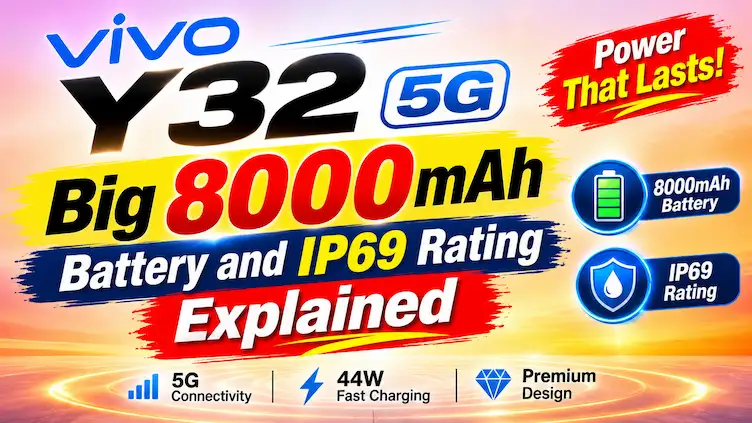
Vivo Y32 5G: 8000mAh Battery and IP69 Rating Explained

Vivo Y32 5G with 8000mAh battery and IP69 rating

In this article we talk about the Vivo Y32 5G Tell me, how many times has your phone died at the worst possible moment? For me, it happened just last month. I was booking a taxi late at night around 10 PM, and my phone had only 3% battery left. That day I decided that battery is more important than a fancy camera. That’s why the Vivo Y32 5G caught my attention. It comes with a big 8000mAh battery, Snapdragon 4 Gen 2 chip, and IP69 rating all in a budget-friendly style phone. In this article, I’ll explain everything in simple words so that you can decide whether it’s right for you or not.  Highlights Battery: 8000mAh with 44W wired charging  Chip: Snapdragon 4 Gen 2 (4nm)  Display: 6.87-inch LCD, 120Hz, up to 1300 nits  Protection: IP68 and IP69, plus MIL-STD-810H  Memory: 6GB RAM, 128GB storage, microSD up to 2TB  Software: OriginOS 6 on Android 16  Colors: Black and Gold  What Is Vivo Y32 5G and Why Is Everyone Talking About It? Vivo announced the Vivo Y32 5G on 2 November 2026. The phone is all about long battery life and a tough body. Most budget phones give you one of these things. This one tries to give you both.  However, there is one small warning. Do not mix it up with the plain Vivo Y32, which reports say uses a Unisoc chip. The Vivo Y32 5G uses a Snapdragon chip, so it is a different phone.  Vivo Y32 5G Full Specifications and Features Now let’s talk about the numbers. Here are the Vivo Y32 5G specifications that matter most.  Feature Claude AI ChatGPT Google Gemini Writing Quality Excellent Very Good Good Context Window 200K tokens 128K tokens 1M tokens Image Generation No Yes (DALL-E) Yes Web Browsing Limited (free) Yes (paid) Yes Coding Help Excellent Excellent Good Free Plan Yes Yes Yes Pricing (Paid) $20/month $20/month $20/month Privacy Focus Very High High Moderate Wi-Fi 5 and Bluetooth 5.1 are also listed. These are a bit old, but fine for daily use.  Is the Vivo Y32 5G 8000mAh Battery Really a Big Deal? Yes, it is. A normal phone has a 5000mAh battery. So the Vivo Y32 5G 8000mAh battery is much bigger. In my experience, a bigger battery means less stress. You stop checking the percentage every hour.  Vivo says the battery keeps more than 80% of its capacity after 1500 charge cycles. That is a company claim, so I would wait for real tests. Still, it sounds promising for long-term use.  The phone supports 44W wired charging. That is decent, but filling an 8000mAh battery will still take time. Also, it has 7.5W reverse charging. You can charge earbuds or a friend’s phone in an emergency.  Vivo Y32 5G 8000mAh Battery and Snapdragon 4 Gen 2 Details The Snapdragon 4 Gen 2 uses a 4nm design, which helps save power. So the big battery and efficient chip should work well together. I expect easily one full day, and for light users maybe more. However, heavy gaming will drain it faster.  Also Read: Vivo X500 Series Launch: Camera Upgrades & India Date What Does the Vivo Y32 5G IP69 Rating Mean for You? If you think as I do, you hate worrying about water. A few months ago, my friend dropped his phone in a bucket at a wedding. It was a very bad day for him.  The Vivo Y32 5G IP69 rating helps here. IP68 means strong protection against dust and deep water. IP69 means protection against high-pressure, hot water jets. This is rare in budget phones.  Vivo Y32 5G IP69 Rating and Battery Performance Explained A tough body and a big battery fit well together. You can use the phone outside, in the kitchen, or in the rain without much fear. The phone also has MIL-STD-810H and SGS 5-star drop ratings.  However, please be careful. Water protection is not permanent and can weaken with age. Also, the warranty usually does not cover water damage. So don’t test it on purpose.  Is Snapdragon 4 Gen 2 Enough for Daily Use? Let me be honest. The Vivo Y32 5G Snapdragon 4 Gen 2 chip is not a flagship. It is built for budget 5G phones. It has 8 cores and a 4nm design.  For calls, WhatsApp, YouTube, social media, and online classes, it should work fine. The phone has 6GB RAM, and you can add 6GB virtual RAM. Moreover, UFS 2.2 storage helps apps open faster than older storage types.  Gaming and Multitasking For games like Free Fire or Ludo, you should be okay. For heavy games at high settings, you may see lag. Therefore, if gaming is your top priority, look at a stronger chip. But for normal users, the Vivo Y32 5G is enough.  Also Read: Best AI Tools in 2026: Top 25 Free & Paid Options How Are the Display and Camera on Vivo Y32 5G? The 6.87-inch screen is big, which is great for videos. The 120Hz refresh rate makes scrolling smooth. Up to 1300 nits of brightness should help in sunlight.  Now the not-so-good part. The screen is an LCD with 1592 x 720 resolution. That is HD+, not Full HD. Text may look a little less sharp than on AMOLED phones. It is fine at this level, but I would still call it a compromise.  Camera Quality The main camera is 50MP. In good light, I expect decent photos. The 2MP second sensor is mostly for show. Honestly, I would not count it as a real camera. The front camera is 8MP, good enough for video calls.  Vivo Y32 5G Expected Price in India Everyone asks this first. Right now, Vivo has not announced the price or sale date. So any number you see online is a guess. I will not guess one here.  What I can say is that the phone looks aimed at the budget 5G segment. Therefore, the Vivo Y32 5G expected price in India should stay friendly if … Read more

Vivo X500 Series Launch: Camera Upgrades & India Date

Vivo X500 smartphone with stunning 200MP camera.

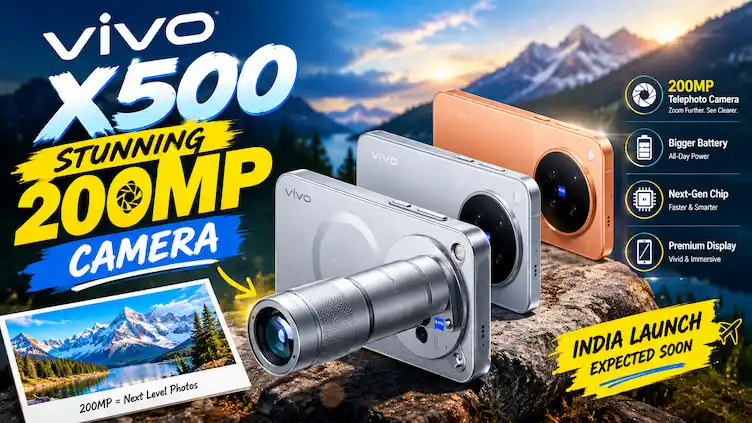
Tell me, when a new Vivo flagship phone comes out, what do you check first in it? For me, it’s always the camera. That’s exactly why the Vivo X500 Smartphone has caught my attention this month. These phones are already available for sale in China and have now started to appear in some global markets, and now in India, people have only one question: when will it arrive here for us? In this article, I’ll tell you about the launch of the Vivo X500 series, the major camera changes, key specifications, and the expected Vivo X500 Smartphone launch in India in November. I’ll also clearly explain what has been 100% confirmed and what is just a rumor. Vivo X500 Series Three phones: Vivo X500, X500 Pro and X500 Pro Max China launch: 21 September 2026 India launch: tipped for the end of November 2026, but not confirmed Biggest camera upgrade: a 200MP telephoto camera on the Pro Max Chips: Dimensity 9600M (X500) and Dimensity 9600 Pro (Pro models) Battery: up to 8,000mAh on the Pro Max (reported) Software: OriginOS 7 based on Android 17 When Is the Vivo X500 Smartphone Launch Date for India? Let’s start with the question everyone is asking. The Vivo X500 Smartphone first launched in China on 21 September 2026. After that, the standard X500 appeared in some Southeast Asian countries, and the Pro models were set for a global release on 27 October. The Vivo X500 Smartphone global launch and specifications are already public in some markets, and the Pro models even have euro pricing listed. That helps us, because Vivo often keeps the same hardware for India. Still, small things like RAM options, colors, and what comes in the box can change from country to country. Now, about India. A recent report says Vivo plans to bring the X500, X500 Pro and X500 Pro Max here by the end of November 2026. However, Vivo has not announced any date yet. So please treat this as a strong tip, not a promise. In my experience, Vivo India usually starts teasing a phone one to two weeks before launch. So if the Vivo X500 Series India launch is really close, we should see teaser posts very soon. Also, an earlier report said the Pro model might stay in China, so do not be surprised if the Indian lineup is smaller. Also Read: vivo V80 Lite 5G With 10,000mAh Battery: Is It Worth It? What Are the Vivo X500 Smartphone Specifications? Here are the key Vivo X500 Smartphone specifications based on China and global listings. Some numbers may change for India, so use this as a guide only. Feature Vivo X500 Vivo X500 Pro Vivo X500 Pro Max Display 6.59-inch AMOLED 6.36-inch AMOLED 6.85-inch AMOLED Refresh rate 144Hz Up to 144Hz Up to 144Hz Chip Dimensity 9600M Dimensity 9600 Pro Dimensity 9600 Pro RAM Up to 12GB Not confirmed Not confirmed Main camera 50MP 50MP 50MP Sony LYTIA L910 Telephoto 64MP 64MP (3.5x) 200MP (3.5x) Battery 7,500mAh 6,510mAh 8,000mAh Charging 90W wired, 40W wireless Reported same Reported same Software OriginOS 7 (Android 17) OriginOS 7 OriginOS 7 India launch Tipped for late Nov Tipped for late Nov Tipped for late Nov The standard X500 has a slightly weaker chip than the Pro models. Still, it is a flagship chip, and honestly, most people will never feel the difference in daily use. Is the Vivo X500 Smartphone Camera Really a Big Upgrade? The Vivo X500 Smartphone camera is the main reason to care about these phones. Vivo teamed up with Zeiss again, and the cameras are tuned for natural colors and sharp zoom shots. Now let’s talk about what is actually new. Vivo X500 Smartphone 200MP Telephoto Camera Details The Pro Max gets the star feature: a 200MP periscope telephoto camera with 3.5x optical zoom on a large sensor. In simple words, a bigger sensor catches more light, so your zoom photos should look cleaner at night. Reports also say it works with a Zeiss 400mm teleconverter kit for extra reach, and 4K slow motion at 960fps is rumored. Here is a small story. A friend of mine once bought a phone because the box said “100x zoom”. The photos looked soft and muddy, and he was upset for weeks. The lesson? Sensor size and lens quality matter more than big numbers. So I will wait for real tests of the Vivo X500 Smartphone 200MP telephoto camera before calling it a winner. What About the Standard X500 and X500 Pro Cameras? Both the X500 and X500 Pro use a 50MP main camera and a 64MP telephoto camera. The standard X500 reportedly uses the same main sensor as the X300 Pro. That is good news, because a tested sensor is safer than a brand new one. However, I will be honest. For the base and Pro models, the Vivo X500 Series camera upgrade looks small. It feels more like a careful improvement than a big jump. If you already own an X300 Pro, I do not think you need to rush. What Is the Vivo X500 Series Expected Price in India? Vivo has not shared the Vivo X500 Smartphone price for India. One leak says the starting price could be close to Rs 1 lakh, but that is only a rumor. So please do not take any price as final until the launch event. Here is what I think. Flagship phones with big cameras and big batteries are never cheap, and the Pro Max will likely cost the most. If you live in the USA, note that Vivo does not usually sell phones officially there. So US buyers may need to look at imports or other regions. Overall, the Vivo X500 Smartphone expected price in India will decide if this series becomes a hit or not. Can the Vivo X500 Smartphone Battery Last All Day? This part is nice. The standard X500 gets a 7,500mAh battery, which is bigger than what most flagship phones offer. The Pro Max goes up to … Read more

OPPO Find X10 Pro Max: Launch Date, Price and Features 

OPPO Find X10 Pro Max camera phone with premium design.

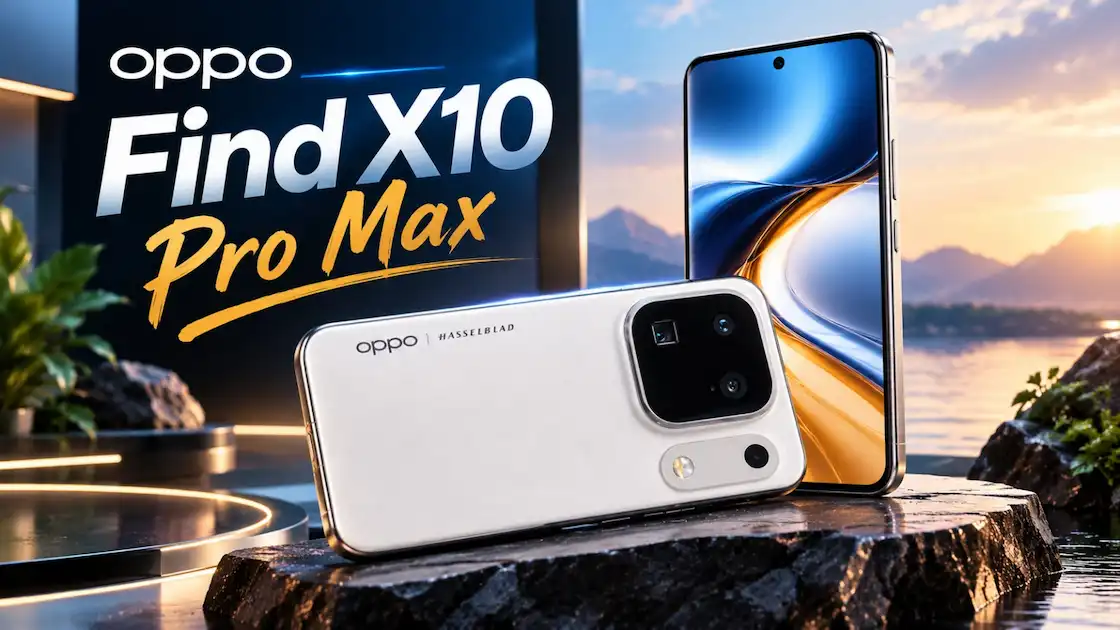
I first read about the OPPO Find X10 Pro Max. Hearing about three 200MP cameras in one phone sounds like a joke, but it’s true. The phone is now available in China, Europe, and India too, so the guessing game is over. In this guide, I’ll share the launch date of the OPPO Find X10 Pro Max, its estimated price in India and the US, and its main features in simple words. I’ll also tell you what’s good and what’s not, so you can decide for yourself without any hype.  Highlights Launch dates: China on September 22, 2026; Europe on October 21; India on October 22 India price: Rs 1,99,999 for 12GB RAM with 512GB storage  Chip: MediaTek Dimensity 9600 Pro (2nm)  Camera: Triple 200MP Hasselblad cameras and a 50MP selfie camera  Battery: 8,000mAh with 80W wired and 50W wireless charging  Software: ColorOS 17 on Android 17  India sale: starts October 29  What Is the OPPO Find X10 Pro Max Launch Date? Good news first. You do not have to wait anymore, because the OPPO Find X10 Pro Max launch date has already passed. The phone came out in phases, which is common for Chinese brands.  China: September 22, 2026  Global event in Spain: October 21, 2026  India: October 22, 2026, with sale from October 29  In my experience, India usually gets a flagship two or three months after China. This time the gap was only about a month, which is quick. In the USA, OPPO does not sell phones through carriers, so most buyers will need to import it.  OPPO Find X10 Pro Max Price in India and USA: How Much Does It Cost? Now let’s talk about the OPPO Find X10 Pro Max price. Take a deep breath, because it is not cheap. The OPPO Find X10 Pro Max expected price in India turned out to be Rs 1,99,999 for the single 12GB RAM and 512GB storage model. The Hasselblad teleconverter kit costs Rs 24,999 extra, and OPPO offers cashback and exchange benefits worth up to Rs 38,000.  For the OPPO Find X10 Pro Max expected price in the USA, I could not find any official number. Converting the India price gives about $2,395, while the Europe price of €1,799 is close to $2,000. Please treat these as rough guides, because import fees and shipping can change the final bill.  To give you some context, the Find X9 Pro launched in India at Rs 1,09,999 last year. So this is a big jump. In China, the Pro Max started at CNY 6,799, which is about Rs 97,000. Honestly, rising memory prices are one reason, but Indian buyers still pay much more.  OPPO Find X10 Pro Max Specifications and Features at a Glance Here is the OPPO Find X10 Pro Max full specifications and features table. I kept only the important rows.  Feature Details Display 6.78-inch 1.5K LTPO AMOLED Resolution 2772 x 1272 pixels Refresh rate 1 to 120Hz, up to 144Hz in games Processor MediaTek Dimensity 9600 Pro (2nm) RAM and storage 12GB RAM, 512GB storage Main camera 200MP Hasselblad Ultra-wide 200MP, 124-degree view Telephoto 200MP, 3x periscope Selfie camera 50MP Battery 8,000mAh Charging 80W wired, 50W wireless Software ColorOS 17 (Android 17) Durability IP66, IP68 and IP69 Colors Titanium Grey, Luna White That is the quick view. Now let’s look at the parts that really matter.  Is the OPPO Find X10 Pro Max Camera Really Worth the Hype? The OPPO Find X10 Pro Max camera is the main reason this phone exists. All three rear cameras use 200MP sensors, and OPPO calls this a world first. The main camera is tuned by Hasselblad. The ultra-wide lens covers 124 degrees. The telephoto is a 3x periscope lens with up to 120x digital zoom.  What Does Triple 200MP Mean for You? Most phones have one great camera and two average ones. Here, all three are strong. So when you switch from wide to ultra-wide, the photo quality should stay close. If you think like I do, that matters more than one big number on the box. A friend of mine once shot a family wedding on a flagship, and the ultra-wide photos looked dull next to the main camera. This phone tries to fix that exact problem.  Also Read: Can AI Tools Write High-Quality Blog Posts? Complete Guide Do You Need the Hasselblad Teleconverter Kit? The kit is an add-on lens that pushes your zoom even further. It costs Rs 24,999 in India. Honestly, most people do not need it. It is made for photo lovers who shoot birds, sports, or far-away scenes. For selfies, the 50MP front camera records 4K video at 60fps with Dolby Vision, which is already great for vlogs. OPPO Find X10 Pro Max Display, Chip and Battery: What Is Inside? Display: Big, Bright and Smooth The 6.78-inch LTPO AMOLED screen is sharp at 1.5K resolution. It supports HDR10+ and Dolby Vision, and the refresh rate goes up to 144Hz in supported games. Reports say peak brightness reaches 2,000 nits, so using it in sunlight should be easy. In short, the OPPO Find X10 Pro Max camera, battery, and display specifications all look strong on paper.  Performance: First 2nm Chip in India The MediaTek Dimensity 9600 Pro is a 2nm chip, and this is the first phone in India to use it. So you can expect smooth gaming, fast app opening, and good AI tools. The phone runs ColorOS 17 based on Android 17. One listing also says OPPO promises five years of OS updates, but please confirm this on the official page before you buy.  Build: Ready for Rain and Dust The phone has IP66, IP68, and IP69 ratings, so it can handle splashes, dust, and even high-pressure water jets. It comes in Titanium Grey and Luna White. At 233g, it is not a light phone, so a good case is a smart idea. I dropped my last flagship once on a tiled floor, and the repair bill still makes me sad.  Battery: 8,000mAh, … Read more

Redmi K100 Benchmark Leak: Geekbench Scores Revealed

Redmi K100 benchmark result showing Snapdragon 8 Elite Gen 5 Geekbench scores

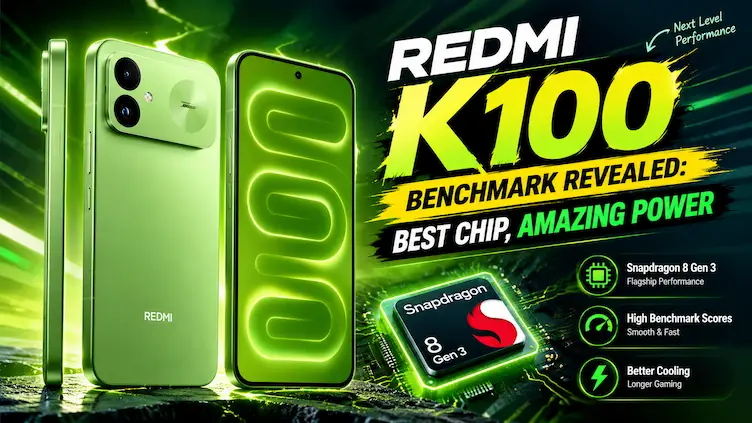
The Redmi K100 benchmark leak was one of those moments. A few months ago, two Redmi phones with the same flagship chip appeared on Geekbench, and the scores got everyone talking. In this article, we will look at the benchmark numbers of the Redmi K100, what they mean in everyday use, and what happened after the launch. I will keep it simple and honest, without any hyped-up promotion. Redmi K100 Benchmark Single-core score: 3,429 points Multi-core score: 10,461 points Will the Snapdragon 8 Elite Gen 5 and 16GB RAM give powerful performance? Software: Android 16 Charging: 100W wired charging seen on the 3C listing Launch date: 11 August 2026 in China India launch: Not confirmed yet What Did the Redmi K100 Benchmark Leak Really Show? The first listing carried the model number M511CD. It showed the Snapdragon 8 Elite Gen 5 chip, 16GB of RAM, and Android 16. The Redmi K100 Geekbench score was 3,429 in single-core and 10,461 in multi-core. Tipsters on Weibo linked this phone to the K100 Pro. Then a second phone with the model number M098FE appeared. Its score was 2,965 in single-core and 10,064 in multi-core. So, the multi-core result stayed close, but the single-core result was lower. The Redmi K100 benchmark leak reveals powerful performance, at least on paper. However, I would not read too much into the gap. Geekbench results change with the chip version, the room temperature, and even the battery level. One result is a hint, not a final answer. Is the Redmi K100 Performance Really Powerful? Now let’s talk about what these numbers mean for you. How to Read the Scores in Simple Words Think of single-core like how fast one chef can cook one dish. Multi-core is how many dishes a full kitchen can handle at the same time. Single-core helps with opening apps and scrolling. Multi-core helps with gaming, video editing, and heavy multitasking. Does a score of over 10,000 in multi-core show flagship performance? In plain words, this Redmi K100 benchmark result puts the phone close to phones that cost much more. In my experience, a high score does not always mean a happy phone. Once, I bought a phone only because of its big benchmark score. It felt fast for a week, then it got hot during long gaming and slowed down. That taught me to wait for real reviews. Where the Scores Look Good and Where I Stay Careful The good part is clear. The Redmi K100 benchmark numbers show strong power for gaming and daily use. The big Snapdragon 8 Elite Gen 5 chip is built for heavy work. However, here is the honest part. Geekbench is a short test. It does not show heat, battery drain, or how the phone behaves after 30 minutes of gaming. If you think as I do, you will treat the leak as a good sign, not as proof. Redmi K100 Processor: What Is Inside? The Redmi K100 processor in the leak was the Snapdragon 8 Elite Gen 5. The listing showed two fast cores at 4.61 GHz and six cores at 3.63 GHz. The same chip family powers flagship phones like the Xiaomi 17 Ultra. After the launch, we learned one more detail. The K100 Pro uses a Snapdragon 8 Elite Gen 5 V Series chip, which is a slightly changed version. The K100 Pro Max uses the regular Snapdragon 8 Elite Gen 5. So the Redmi K100 processor is not exactly the same on every model. That explains why the Redmi K100 benchmark scores were not identical. For most people, both versions will feel very fast. Also Read: Redmi K100 Pro First Look: Glow-in-Dark Edition Revealed Will Redmi K100 Performance Help in Gaming and Daily Use? Yes, it should. With a score near 10,000 in multi-core, games like BGMI, Call of Duty Mobile, and Genshin Impact should run smoothly at high settings. That is my honest guess, not a lab result. The Redmi K100 Geekbench benchmark score and performance look strong for this kind of use. Apps will open fast too. Video editing, photo editing, and switching between many apps should feel smooth. A 185Hz screen adds to that feeling, though only games that support high refresh rates will use it fully. One thing I worry about is heat. Big chips can get warm, and the leak could not tell us how well Redmi cools this phone. Tell me the truth, would you buy a phone that scores high but slows down in 20 minutes? I would not. So check thermal tests first. Redmi K100 Specifications You Should Know Here are the main Redmi K100 specifications for the K100 Pro, based on the China launch details. These Redmi K100 Geekbench scores and expected specifications now match the real phone quite well. Feature Details Launch date 11 August 2026 (China) Display About 6.6-inch OLED Refresh rate 185Hz Processor Snapdragon 8 Elite Gen 5 V Series RAM Up to 16GB Storage Up to 512GB Main camera 200MP Other cameras 50MP telephoto, 8MP ultra-wide (as reported) Battery 8,580mAh Charging 100W wired, wireless supported Software Android 16 with Xiaomi HyperOS Weight About 218g China starting price About $548 Redmi K100 Pro vs Pro Max: Which One Should You Look At? The Pro Max is the bigger sibling. Here is the simple difference: K100 Pro: about 6.6-inch screen, 8,580mAh battery, starts around $548 K100 Pro Max: bigger 6.9-inch screen, 9,070mAh battery, regular Snapdragon 8 Elite Gen 5, starts around $622 If you want power in a smaller body, the Pro makes sense. If you want a bigger screen and more battery, go for the Pro Max. Both follow the same Redmi K100 benchmark story, which is high speed at a lower price than top flagships. Redmi K100 Launch Date: Has It Already Launched? Yes, and this is important. The leak came in July, and Redmi launched the K100 Pro and K100 Pro Max in China on 11 August 2026. So the Redmi K100 launch date is no longer a rumor … Read more

OPPO Find X10 vs Find X9: Worth Upgrading?

OPPO Find X10 vs Find X9 price comparison

The question of OPPO Find X10 vs Find X9 isn’t as simple as ‘new is better.’ Friend, tell me, are you holding onto the Find X9 and wondering if the new phone is worth your savings or not? I myself faced this situation just last week. The Find X10 has now officially launched on tour in China and India, so we now have the real numbers to talk about. Some upgrades are big to look at, and some are small despite the price increase. I’ll explain it to you in simple words ahead. Highlights Chip: The Find X10 uses the Dimensity 9600M, which is a rebranded Dimensity 9500. So the speed is almost the same as the Find X9.  Camera: Two 200MP cameras (main and zoom) against three 50MP cameras.  Battery: 8,000mAh against 7,025mAh.  Display: A sharper 2K screen with up to 144Hz.  India price: ₹1,39,999 against ₹74,999 at Find X9 launch. OPPO Find X10 vs Find X9 Specifications at a Glance Before the details, let’s look at the main specs side by side. This is the quick view of OPPO Find X10 vs Find X9 specifications and features.  Feature OPPO Find X10 OPPO Find X9 Display 6.59-inch 2K LTPO AMOLED 6.59-inch AMOLED, 1256p Refresh rate Up to 144Hz 120Hz Chipset Dimensity 9600M (3nm) Dimensity 9500 (3nm) RAM 12GB / 16GB 12GB / 16GB Storage 256GB to 1TB 256GB / 512GB Main camera 200MP, f/1.6 50MP Zoom camera 200MP periscope, 2.8x optical 50MP periscope Ultra-wide 50MP, autofocus 50MP Front camera 50MP, autofocus 32MP Battery 8,000mAh 7,025mAh Charging 80W wired, 50W wireless 80W wired, 50W wireless Software Android 17, ColorOS 17 Android 16, ColorOS 16 Dust and water IP66 / IP68 / IP69 IP68 / IP69 How much better is the new design and display? Let’s start with what you see every day. The OPPO Find X10 keeps the same 6.59-inch size, so it still fits nicely in one hand. The change is sharpness. You get a 2K panel with a refresh rate up to 144Hz and very high PWM dimming for easier on the eyes at night.  The Find X9 screen is good, but it is a step lower in sharpness. In my experience, most people will not notice the difference in daily use. You will see it more when you watch videos in HDR or zoom into photos.  The Find X10 also has a new rectangular camera island instead of the round one. It looks fresh, though it is a matter of taste. It weighs about 216 grams, so it is not light.  Performance: Will You Feel Any Speed Difference? Here is the honest part. The Find X10 chip is a rebranded Dimensity 9500, the same family that powers the Find X9. So the OPPO Find X10 vs Find X9 speed gap is very small. Both phones open apps fast, play heavy games like BGMI or Genshin Impact well, and handle multitasking without trouble.  If you think as I do, a new chip name should mean a real jump. Here it does not. The high-performance Dimensity 9600 Pro is limited to just the Find X10 Pro Max, and this model comes in the expensive price range. So if you only care about speed, your Find X9 is still very strong.  Also Read: Can AI Tools Write High-Quality Blog Posts? Complete Guide OPPO Find X10 vs Find X9 Camera: Is 200MP Worth the Hype? This is where the new phone makes its case. In the OPPO Find X10 vs Find X9 camera comparison, the Find X10 has two 200MP cameras. The main one uses a large 1/1.4-inch sensor with a bright f/1.6 lens and stabilization. The zoom camera is also 200MP, with 2.8x optical zoom.  The Find X9 uses a 50MP main camera, a 50MP ultra-wide, and a 50MP periscope zoom. Its camera quality is quite good, which captures natural pictures and can remain a great option for users for many years.  A small story: last year I took my Find X9-class phone to a family function and shot some far-away stage photos. The zoom shots were fine, but I lost detail when I cropped. This is exactly where a 200MP zoom sensor should help. I have not tested the Find X10 myself yet, so I will not promise miracles. More megapixels do not always mean better photos. Real reviews will tell us how the processing works.  The selfie camera also improves. It goes from 32MP to 50MP, and it now has autofocus, which is great for group selfies.  Battery and Charging: Is 8,000mAh a Big Deal? Yes and no. The Find X10 has an 8,000mAh battery against 7,025mAh on the Find X9. That is about 14% more capacity. On a normal day, you may get a few extra hours.  Charging speed looks the same on paper: 80W wired and 50W wireless from the China launch details. One Indian report mentioned 67W wired charging, so please check the box details at the time of buying.  The Find X9 is already known for good battery life, so this is a nice bonus, not a reason by itself to upgrade.  Software and Updates: Android 17 vs Android 16 In terms of software, the Find X10 was launched with Android 17 and ColorOS 17. The Find X9 started on Android 16 and ColorOS 16, and it should get the newer software later. So you are not left behind. However, the new phone gets the latest features first, and that matters if you like trying new things early.  OPPO Find X10 Price vs Find X9: How Big Is the Gap? Now let’s talk about the part that hurts. The OPPO Find X10 price in India starts at ₹1,39,999 for the 12GB + 256GB model. The 12GB + 512GB model costs ₹1,69,999. The sale for customers will start on October 29, 2026.  The Find X9 launched in India at ₹74,999 for the base model. That is a big gap, nearly double. If you want the OPPO Find X10 vs Find X9 price comparison in … Read more

FCC Foreign Surveillance Chip Ban: Intel Robot Waiver 

FCC foreign surveillance chip ban 2026

Tell the truth, when you first saw the phrase ‘FCC foreign surveillance chip ban,’ did you think it was about computer chips? I thought the same. Then I looked into it a bit more deeply and found something even more interesting. Actually, this provision is about robots made abroad. Intel, which is one of America’s leading semiconductor companies, has requested special permission to continue using the vehicles in its factories.  In this article, we’ll break down the FCC foreign surveillance chip ban in simple terms. We’ll look at why Intel wants a waiver, what’s still unclear, and what it means for tech companies in the U.S. and readers in India.  Highlights The FCC foreign surveillance chip ban story started on July 28, 2026, when foreign-made advanced robots were added to the FCC’s restricted list.  In mid-October 2026, Intel officially filed its petition in ET Docket 26-256.  The request is about automated guided vehicles (AGVs) that carry wafers and materials inside chip factories.  Intel hasn’t yet been able to identify any option made in the US that has been officially certified.  The waiver is a request, and the final FCC answer is still pending in the latest reports.  Old robots are not banned from running, but updates and repairs are the big worry.  What Is the FCC Foreign Surveillance Chip Ban in Simple Words? Now let’s talk about the basics. People online also talk about foreign surveillance chips, but the rule itself talks about robots. On July 28, 2026, the Federal Communications Commission added foreign-made advanced robots and connected power inverters to its Covered List. That list is where the agency puts gear it sees as a risk to national security.  Why does this matter? Because if a product sits on that list, new models cannot get the FCC approval needed to be sold in the USA. Officials say they worry about spying, cyber attacks, and too much dependence on one country, mostly China.  The good news for owners is simple. The FCC did not tell people to throw away robots they already have. So the FCC foreign chip ban mainly blocks new models. The tricky part is what happens when old machines need a software or hardware update.  Why Is Intel Asking the FCC for a Factory Robot Waiver? Picture a chip factory like a giant, super clean airport. Wafers are the tiny discs that become chips, and they travel from one machine to another all day. Automated guided vehicles do that moving work, on the floor and also on tracks near the ceiling.  Under the FCC foreign surveillance chip ban, Intel says its foreign-made factory robots are in a gray zone. Its petition says it cannot find proven American replacements, and swapping them out would take years. In its view, even a short break could cut chip output, and that is a national security issue too.  In my experience, big machines are never “set it and forget it.” Even a small shop needs spare parts and fixes. A busy chip plant needs them even more. That is why the Intel factory robots waiver matters. Intel wants clear permission to keep maintaining and updating these vehicles, and it also said the FCC guidance feels unclear, so it asked early to stay safe.  Is the Intel Exception Really Approved Yet? This is where many headlines get confusing. Some titles make it sound like the exception is already final. Based on the latest reports I found, Intel has asked for a waiver. The case sits in ET Docket 26-256, and the FCC has not given a clear final answer yet. So please do not treat it as a done deal.  Also, the FCC foreign surveillance chip ban is not a total wall. This rule allows approval of some new versions of foreign-made robots based on certain conditions. That means a company can ask the FCC for permission, and the agency can say yes under set rules. The FCC has used waiver tools on other restricted gear before, so a waiver is possible, but nobody can promise it.  Also Read: RAM Price Hikes Cut PC Shipments by Over 20% in Q3  What Could the FCC Do Next? There are three simple outcomes. The FCC can approve Intel’s request fully. It can approve it with limits, such as only for certain vehicles. Or it can say no and ask Intel to find another path. I would not bet on any of them yet.  How Does the FCC Foreign Surveillance Chip Ban Affect US Tech Companies? Now let’s talk about the bigger picture. Intel is the loud example today, but it will not be the last. Any company that uses foreign-made robots in warehouses, labs, or factories may ask the same question: can we still fix and update what we already own?  Here is how the FCC chip restrictions may touch the tech world:  Chip companies might need new regulatory guidelines for vehicles and transportation systems running in factories.  Warehouse and EV companies may need to check which robot brands they use.  Foreign robot sellers may find it hard to launch new models in the USA.  American robot makers can take advantage of this situation to boost their business.  The FCC foreign surveillance chip ban’s impact on the US tech industry has two sides. The rule may protect sensitive systems. However, it may also slow plants that depend on parts and tools made abroad. The truth is, both things can be right in their own ways. The Good, the Bad, and the Confusing If something is good, I will just call it good. The goal behind the FCC foreign surveillance chip ban is fair. Robots have cameras, sensors, and Wi-Fi, so people are right to ask who controls the software. A rule that pushes companies to think about security is not a bad idea.  However, the bad part is the timing. Chip factories are a top priority for the USA right now, and no one wants delays there. Also, Intel says the guidance is … Read more

RAM Price Hikes Cut PC Shipments by Over 20% in Q3 

RAM price hikes and PC shipment decline over 20% in Q3.

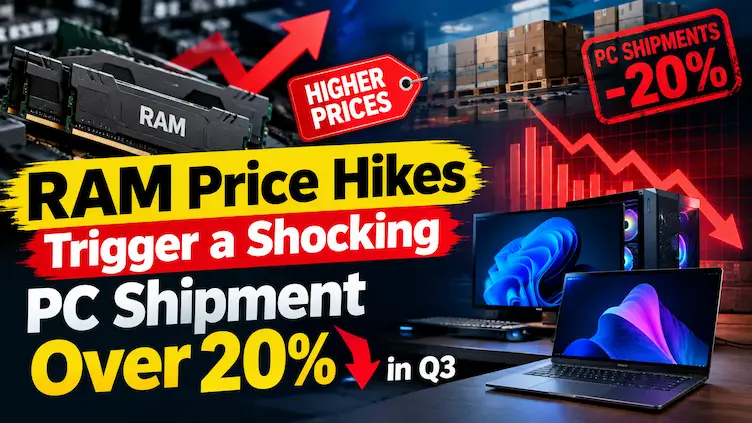
RAM price hikes have pushed the whole PC market into a tough spot, and the Q3 numbers show it clearly.  Recently, seeing this, you must have also wondered how this actually happened, right? You’re not alone.  According to IDC’s preliminary estimates, the global PC market saw a big drop between July and September 2026. During this period, PC shipments fell 20.1% year-on-year, limited to 62.7 million units. In this article, I’ll explain why this happened, who got hit the hardest, and what it means for you in the US and India. Highlights Global PC shipments fell 20.1% year over year in Q3 2026, says IDC.  There was a difference in the figures from the two research firms. Omdia reported a 21.2% drop, while Gartner reported a 22.4% decline.  RAM price hikes and costly storage pushed PC prices up.  AI data centers are taking a big share of memory chips.  Early stockpiling made the Q3 fall look even sharper.  IDC expects the memory shortage to last at least until the end of 2027. How did PC shipments perform during the third quarter of 2026? Let’s start with the basic numbers. IDC says 62.7 million PCs shipped in Q3, down from 78.5 million a year earlier. That is also 9.1% lower than Q2. Normally, the third quarter gets a lift from back-to-school shopping. This time, that lift never came.  Other firms saw the same thing. According to the Omdia report, there was a 21.2 percent decrease. Gartner reported 55.4 million units, a 22.4 per cent fall. The numbers differ because each firm counts in its own way. However, the story is the same everywhere. The PC shipments decline is real, and RAM price hikes are a big reason.  One small note. The shipment numbers don’t show that the same number of products were sold to customers. Shipments show what companies send to stores and distributors, so they do not exactly show what people bought. Still, they tell us where the PC market slowdown is heading.  Why Are RAM Price Hikes Hurting the PC Market So Much? Here is the simple answer. RAM is a must-have part in every computer. When its price jumps, the cost of building a laptop or desktop jumps too. Gartner said DRAM costs rose five times year over year in Q2, and PC makers passed those costs on to buyers. How is the jump in RAM prices affecting the PC market supply?  Now, RAM is a smaller part of a PC than the processor or the screen. However, a huge price jump still changes the total bill, mainly in models with 32GB, 64GB, or more. One report even mentioned a 128GB DDR5 kit costing up to $3,399.  AI data centers also need the same type of memory. Why is memory so costly? Because AI companies are building giant data centers. They need top-quality memory and fast storage, and they are ready to pay more. Chip factories therefore shift their effort to those orders, and regular PC makers must fight for what is left. In my experience, when a rich buyer enters a small market, normal buyers always lose.  Stockpiling Made Q3 Look Worse There is another side to this story. Vendors and channels increased orders in the first half of 2026 because they expected RAM and storage prices to rise further. Shipments went up 3.2% in Q1, then fell just 4% in Q2. By Q3, that rush was over, so part of the 20% drop is a hangover.  However, experts do not fully agree. IDC talks about sellers fearing extra stock. Gartner says the fall came mostly from higher prices and makers choosing where to use scarce parts, not from extra stock. Both views lead back to RAM price hikes.  Also Read: Can OpenAI GPT-6 Fix 60-Year-Old Banking Code? Which PC Brands Took the Biggest Hit? Lenovo stayed number one with 14.9 million PCs and a 23.8% share. HP came second with 10.3 million, then Dell with 7.6 million, and Apple with 5.9 million. Lenovo, HP, and Dell all declined faster than the overall market.  HP had the worst number in IDC’s data, with a 30.9% drop. Apple fell 11.3%, which is smaller. If you think as I do, this shows that brands selling many budget and mid-range laptops feel the pain first. Cheap models have thin profit margins, so they cannot easily absorb costly memory.  How does expensive RAM in the US and India affect PC prices? Let me be honest. Nobody has a perfect price forecast for each country. But the direction is clear. In February, Gartner projected a 17% rise in PC prices and the disappearance of models under $500 by 2028. That is a forecast, not a promise, but it shows the worry.  What US Buyers May See In the USA, shoppers wait for sales like Black Friday. This year, deals on RAM-heavy laptops may be smaller. IDC’s Jitesh Ubrani said promotions and short-term relief could come, but prices will stay elevated. Gamers and creators who need 32GB or more may feel it most.  What Indian Buyers May See In India, many people buy a laptop for study or work and watch the budget closely. I once helped a cousin pick a college laptop, and a few thousand rupees decided everything. Amid rising RAM prices, people might find it better to wait a bit before buying a new device, go for an older device, or choose a variant with less space. Reports do not give an Indian price series yet, so watch local store prices closely.  What Does This Mean for Laptop Makers and Sellers? For makers, it is a hard balance. If they raise prices, fewer people buy. If they keep prices low, profit shrinks. For this reason, many companies are now promoting premium smartphones, because it’s easier to fit the rising cost of memory within the price.  Sellers have a different headache. They stocked up early, and now high prices are keeping buyers away. A friend who runs a small computer … Read more

Can OpenAI GPT-6 Fix 60-Year-Old Banking Code?

OpenAI GPT-6 fixing America's old banking code

Many big banks still rely on an old computer language from 1959, COBOL. But now OpenAI GPT-6 is here, and people are asking a big question: Can OpenAI GPT-6 modernize the old banking code or not? Come on, let’s understand this in a simple way without any fuss. Last month, my cousin living in Texas tried to send money to his sister in Hyderabad on a Sunday. The app replied, ‘Try again on Monday.’ But honestly, even in a digital age like 2026, who likes waiting until Monday for something? That tiny moment made me curious to find out what’s really going on behind our banks. The answer shocked me. Highlights COBOL was created in 1959, and many banks still use it. OpenAI GPT-6 launched in September 2026 for approved business testers, then reached ChatGPT in October 2026. AI can read and explain old code fast, but humans must check every step. I found no official proof that OpenAI GPT-6 has already rewritten a real bank’s core system. Whether it’s America or India, banks in both countries are affected by this problem, but the way they deal with it is different. The safe way is to take small steps, carefully check each stage, and keep human supervision in place. What Is the 60-Year-Old Banking Code Everyone Talks About? Think of your bank like an old house. The walls look fresh, and the app looks smart. However, deep inside, the pipes are very old. The old pipeline system is considered the main banking system, much of which was developed in the COBOL programming language. COBOL is a language made in 1959 for business work like payments, balances, and interest. Fortune once quoted an Accenture leader who said that when you dig into the core of most major banks, you reach COBOL. That tells you how deep this goes. Why Do Banks Still Use COBOL? Honestly, it is because the code works. It has handled money for decades. Nobody wants to touch something that moves millions of dollars every day. Also, many old programs have poor documentation, so new engineers struggle to understand them. Moreover, switching is costly. When Commonwealth Bank of Australia replaced its core system, the work took five years and cost almost 750 million dollars. So you can see why banks move slowly. Point Quick Fact Programming language COBOL Year COBOL was created 1959 Share of banking systems on COBOL (often quoted) About 43% Estimated COBOL lines still used Around 200 billion GPT-6 Astra first release September 3, 2026 First access Daybreak program business users GPT-6 Astra API price $10 input, $50 output per 1M tokens GPT-6 Sol Paid ChatGPT plans GPT-6 Luna Free and Go plans ChatGPT rollout start October 7, 2026 Bank example cost About $750 million (CBA) Bank example time Five years Official proof of GPT-6 rewriting a bank core Not found Look at the last row again. It matters most. Many news posts make loud claims, yet a clear public case study of OpenAI GPT-6 rebuilding a real bank core is missing. That does not mean it cannot happen. It only means we should wait for proof, not headlines. Honestly, that is a fair and calm way to look at any new AI tool. Simple, right? I think so too. Also Read: Can AI Tools Write High-Quality Blog Posts? Complete Guide Can OpenAI GPT-6 Modernize Legacy Banking Code? Short answer: it can help a lot, but it cannot do the job alone. OpenAI’s president called OpenAI GPT-6 a generational leap in ability, which sounds exciting. Still, I have not seen any official report saying it has already rebuilt a bank’s core system. So treat big claims with care. Here is where the OpenAI GPT-6 banking code idea makes sense. AI tools can read old COBOL, explain it in plain English, and suggest modern code in Java or Python. IBM and GitHub leaders said something similar in 2023, but they also stressed that humans must stay involved at every step. How AI Can Rewrite 60-Year-Old Banking Code Step by Step If you think like I do, you want a simple plan. Here is how AI code modernization usually works: Read: The AI scans old files and maps how they connect. Explain: It writes simple notes on what each part does. Rewrite: It suggests new code in a modern language. Test: Engineers run old and new versions and compare the results. Move slowly: The bank switches one small piece at a time. A Capco project is a good example. It reviewed more than 2 million lines of COBOL for a global bank, and AI helped study around 150,000 of those lines deeply. That was a trial, not a full switch, but it shows the direction. What Can Go Wrong With AI for Legacy Banking Systems? Now the not-so-good part. The code used in the banking system manages real money, so even a small mistake can be costly. One developer noted that an older AI model made a wrong tax calculation while converting COBOL. That is exactly the kind of error banks cannot accept. Also, Stanford researchers once found that people using an AI coding helper often wrote less secure code. So OpenAI GPT-6 needs strict checks, security reviews, and plenty of testing. Banks must also follow tough laws, so every change needs clear records. I learned this in a small way myself. Once, an AI tool explained a messy spreadsheet formula for me and saved an hour. Still, I double-checked every result. Even if OpenAI GPT-6 is fast, a bank needs expert people. AI saves time on reading and drafting, but it does not replace careful humans. What Should Banks Ask Before Using AI for Legacy Banking Systems? Before any bank trusts OpenAI GPT-6, I think a few simple questions come first. These questions matter more than any fancy demo. Can the AI explain its work in plain words, so a human can check it? Do the old and new programs give the same answer every … Read more