Tech all rounder

Best Camera Phone Under ₹15000 in India (2026) – Top Budget Camera Smartphones

Best Camera Phone Under ₹15000 in India 2026: Ultimate Picks

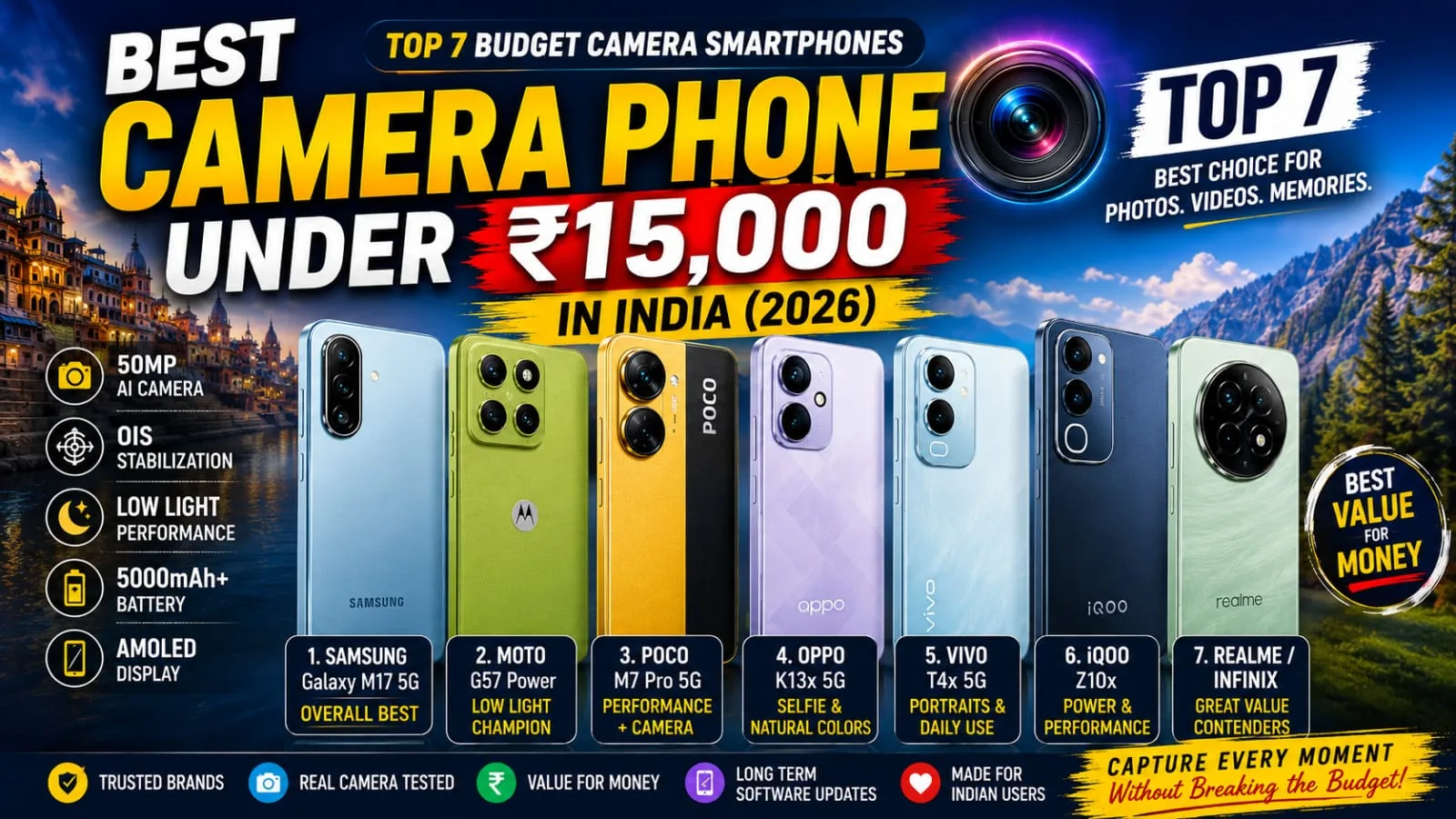
Today is May 2026, and is it still so difficult to find the Best Camera Phone Under ₹15000 for a user? I understand. These days, everyone wants a phone with a good camera for Instagram reels, family functions, and travel photos. But what if the budget is low? I am writing this article for you all based on professional experiences – researching the market, talking to users, and experiencing it hands-on. It is not necessary that you will find a phone with DSLR-level magic, but yes, I will tell you in detail about the top options for the best camera phones available in India for under 15,000 rupees in May 2026. So, let’s get straight to the point. Highlight key Overall Best: Samsung Galaxy M17 5G (Natural colors, OIS, reliable software) Best Low Light: Moto G57 Power (king of Night photography) Best Value: POCO M7 Pro 5G (Vibrant shots + fast performance) Best for Selfies/Portraits: Vivo T4x 5G & OPPO K13x Why Does Camera Matter in the Budget Segment in 2026? First, let’s understand what a camera looks like under ₹15,000. While 48MP or 50MP sensors have become commonplace, the real game lies in OIS (Optical Image Stabilization), software processing, and low-light performance. A friend of mine used an old phone at a wedding last month – photos were blurry, and colors were faded. He said, “If I get a good camera once, life will be set.” So I’m focusing on phones that work in real life – sharp in daylight, usable at night, and portraits that are natural. Now, in 2026, the competition is very tight. Samsung, Moto, Poco, Realme, Vivo, and Oppo are all strengthening their game. Top 7 Best Camera Phones Under 15000 in India (May 2026 Updated) Comparison Table: Best Camera Phones Under 15000 in India (2026) Phone Model Samsung Galaxy M17 5G Moto G57 Power POCO M7 Pro 5G Vivo T4x 5G OPPO K13x 5G Main Camera 50MP + OIS 50MP + OIS 50MP + OIS 50MP AI 50MP AI Key Camera Strengths Natural colors, Reliable processing, Good low light Best Night & Low Light, Clean output Vibrant colors, Fast processing Excellent Skin Tones & Portraits Natural & Pleasing colors, Good video Battery & Charging 5000mAh + 25W 6000-7000mAh + 30W 5000mAh + 45W 5500mAh + 44W 5000mAh + 33W Display AMOLED LCD/AMOLED AMOLED AMOLED AMOLED Price Range ₹13,999 – 14,499 ₹13,499 – 14,999 ₹13,499 – 14,999 ₹13,999 – 14,999 ₹13,799 – 14,799 Best For Overall Best, Family & Daily Use Night Photography & Battery Gaming + Photography, Reels Selfies & Portrait Lovers Selfies, Daily Vlogging 1. Samsung Galaxy M17 5G – Overall Best Camera Phone Under 15000 Samsung Galaxy M17 5G Camera Samples – Best Camera Phone Under 15000 2026 In the category of best camera phones under 15,000 rupees, the Samsung Galaxy M17 5G is at number 1. Samsung has made a solid entry into the budget segment this time. I personally recommend the Galaxy M17 5G if you need a reliable and long-term phone. The 50MP main camera comes with OIS, which works wonders in low light. Colors are natural; skin tones look realistic-not oversaturated like Chinese brands tend to do. I clicked photos with it under streetlights at night; details were preserved, and noise was manageable. The front camera is also quite good for selfies and video calls. The 6.7-inch AMOLED display is vibrant, making editing photos a pleasure. The battery is around 5000mAh+, and Samsung keeps receiving software updates-a big plus. Price around ₹13,999 to ₹14,499. If you are a family person or an office employee and sometimes do night photography, then with good software updates, this is the best option for the best camera phone under 15000. 2. Moto G57 Power – The champion of low light and night photography Moto G57 Power Low Light Night Mode Camera Photos 2026 In the category of best camera phones under 15,000 rupees, the Moto G57 Power is at number 2. Motorola has taken the camera seriously this time. The Moto G57 Power (or G96 variants) has emerged as the king of low light in this segment. 50MP sensor with smart processing – daylight shots are crisp, vibrant, and natural. The ultra-wide lens is helpful for group photos because it captures a wider view. Noise control is very good at night, which is rare at this price point. Remember that trip I took to Varanasi? I took photos of diyas at night at the Ganga Ghat. Moto captured details that some phones blur. Plus, a clean Android experience with no bloatware. A monster 7000mAh battery – it comfortably lasts 2 days. If you are looking for “best low light camera phone under 15000 in India 2026,” then keep this on top. 3. POCO M7 Pro 5G – Powerful Combo of Performance + Camera POCO M7 Pro 5G Vibrant Camera Shots and Gaming Phone Under 15000 In the category of best camera phones under 15,000 rupees, the POCO M7 Pro 5G is at number 3. POCO always delivers value. The M7 Pro has a 50MP OIS camera, fast processor, and a vibrant AMOLED display. Colors are a bit punchy, which looks awesome on social media. Portrait mode is impressive, edge detection is good, and detail king in daylight. If you want to do gaming too, it will handle it. There might be a little heating up in heavy usage, but overall, it is a beast. Price: ₹13,500-14,999. My cousin bought it and now keeps posting new reels every weekend. It is perfect for the best camera phone in the 15000 range, according to gaming and photography. 4. Oppo K13x 5G – For natural colours and selfie lovers OPPO K13x 5G Selfie and Portrait Camera Samples In the category of best camera phones under 15,000 rupees, the Oppo K13x 5G is at number 4. I’ve always liked OPPO’s color science. The K13x delivers natural and pleasing photos. AI features help in clicking pictures in portrait mode and in low light at night. The front camera is strong, which selfie and … Read more

Best Camera Phones: Ultimate Imaging Power Devices 2026

Best Camera Phones 2026 premium smartphone

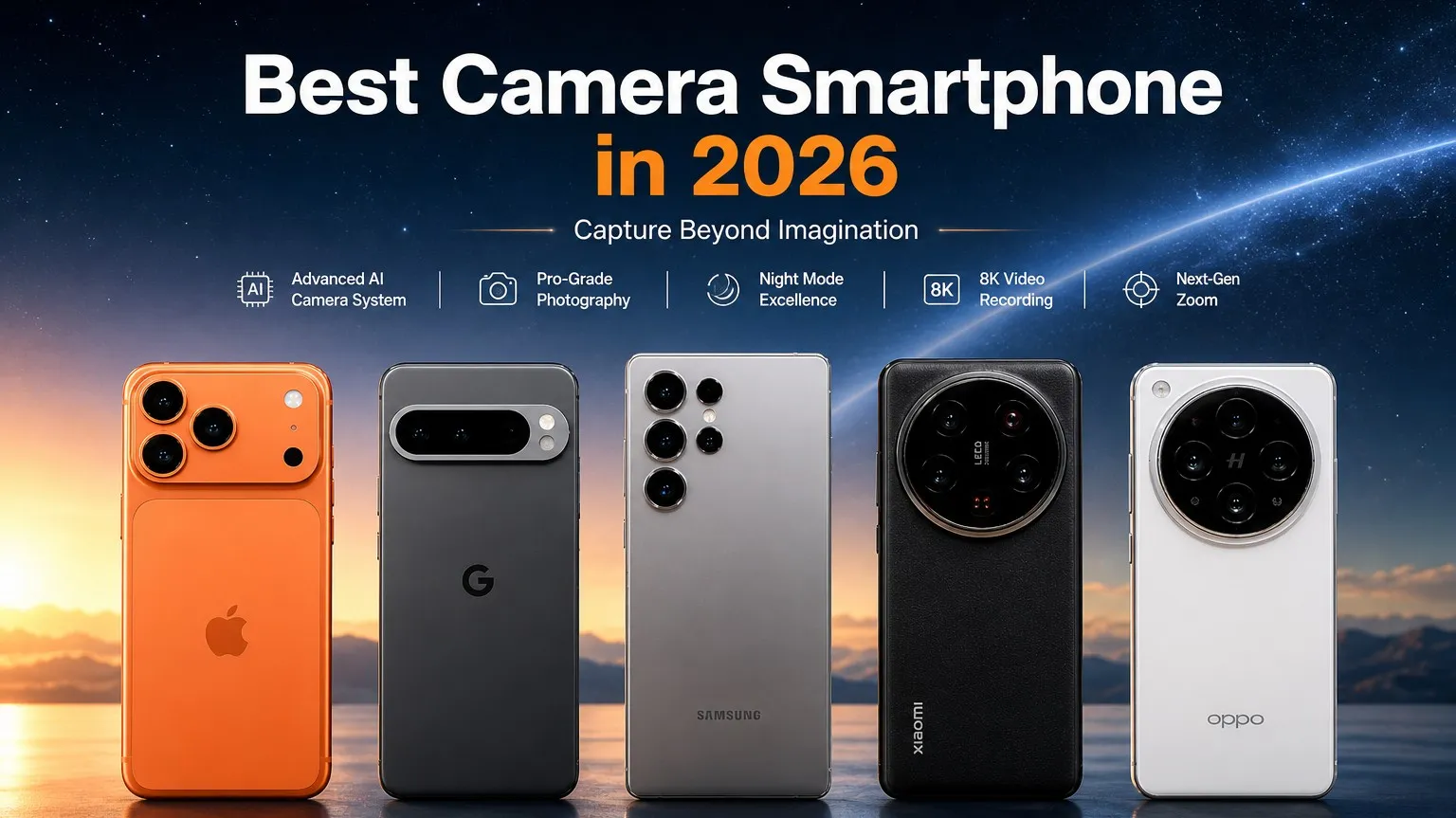
Nowadays, DSLR-like cameras have been replaced by the “Best camera Phones.” In 2026, smartphone cameras have reached such a level that many people are abandoning DSLRs for everyday shooting. With excellent low-light performance, pro-level video recording, and a powerful zoom, these top devices prove that even a small camera can do wonders. Whether you’re a casual photographer seeking reliable point-and-shoot photography without hassle, a creator interested in vlogs, or a serious photographer pursuing beautiful artistic images, read this complete guide to learn about the best camera phones of 2026. We’ll test the devices’ hardware, software, and real-use performance under various conditions, and help you find the right device for your needs. The competition is getting tougher than ever. Chinese brands like Xiaomi, OPPO, and Vivo are taking hardware to the next level with larger sensors and advanced optics, while Apple, Google, and Samsung appear to be leading the way when it comes to consistency and video quality, as well as ecosystem integration. Let’s take a look at the features that make the best camera phones in 2026 special, and which ones are the best. What Defines the Best Camera Phone in 2026? Modern flagship cameras are complex systems featuring multiple lenses, large sensors, advanced image signal processors (ISPs), powerful image signal processors, and intelligent AI algorithms. Key considerations include the following: Sensor size and quality: Larger sensors capture more light and finer details, especially in challenging conditions. Lens versatility: Various focal lengths (from wide to telephoto) enable greater creative exploration without additional gear. Computational magic: AI features like scene recognition, noise reduction, and object removal enhance every photo. Consistency and ease of use: Top cameras deliver impressive output effortlessly in any lighting condition. Video capability: 8K video, smooth stabilization, and professional color control are crucial for content creators. In 2026, the difference in transformation will be evident. Some smartphones excel at still photography thanks to their robust hardware, while others prioritize balanced, reliable performance and excellent video quality. Comparison Table: Top Camera Phones 2026 Phone iPhone 17 Pro Max Google Pixel 10 Pro Samsung S26 Ultra Xiaomi 17 Ultra OPPO Find X9 Pro Best At Video & Consistency Low Light & AI Zoom & Versatility Detail & Hardware Portrait & Zoom Main Sensor 48MP 50MP 200MP Advanced High-res Zoom Performance Very Good Good Outstanding Excellent Excellent Video Quality Outstanding Very Good Excellent Very Good Good Low Light Excellent Best-in-Class Very Good Excellent Very Good Video Recording 4K at 60FPS 4K at 60FPS 4K at 60FPS 4K at 60FPS 4K at 60FPS Price Range (USD) $1199+ $999+ $1299+ $899+ $949+ Top 5 Contenders for Best Camera Phone in 2026 Here are the Best Camera Phones of 2026, ranked by blind tests, expert opinion, and real-world usage: Apple iPhone 17 Pro / Pro Max – The Reliable All-Rounder Apple iPhone 17 Pro / Pro Max Apple has maintained its proven reputation with the iPhone 17 Pro series. This 48MP triple camera setup delivers natural colors and excellent dynamic range, delivering consistent image quality in every photo. The device excels in video quality, while 4K Dolby Vision and smooth stabilization make it a favorite among vloggers and filmmakers. The iPhone performs exceptionally well in everyday situations and low light. Its computational photography maintains natural skin tones and delivers excellent bokeh effects in portrait shots. While it may not have as many megapixels, the hardware-software balance delivers images that are instantly shareable. It is ranked number 1 in Best Camera Phones in 2026 Strengths: Pro-level video quality, dependable shooting performance, and strong ecosystem connectivity. Weaknesses: Zoom performance is decent, yet it doesn’t reach the level of telephoto monsters. Google Pixel 10 Pro / Pro XL – Master of Computational Photography Google Pixel 10 Pro / Pro XL Google’s Pixel 10 series maintains its reputation for iconic photo processing. The Pixel’s 50MP main camera and advanced AI capture natural and detailed photos in all lighting conditions. Innovative features like Best Tech, Magic Editor, and Add Me make it extremely practical and entertaining for social sharing. In portrait and human photography, the Pixel consistently wins blind tests, with highly accurate skin tones and realistic image rendering. Its Night Mode proves unmatched in many conditions, capturing exquisite details even in the darkest of conditions. It is ranked number 2 in Best Camera Phones in 2026 Strengths: Excellent low-light performance, advanced AI editing, and consistently impressive results. Weaknesses: Hardware zoom works well but falls short of Samsung in extreme telephoto. Also Read :  iPhone 17 Complete Information – Is It Worth Buying? Samsung Galaxy S26 Ultra – The Zoom King Samsung Galaxy S26 Ultra The Samsung Galaxy S26 Ultra features a powerful and versatile quad-camera setup, highlighted by its 200MP main sensor and advanced telephoto lens. This smartphone targets users who enjoy zooming in on distant subjects – whether they’re shooting sports, capturing wildlife, or capturing architectural details. The S26 Ultra offers excellent versatility with strong performance at different focal lengths. Its processing sometimes tends to favor bright and pop-up colors, typical of social media. Video quality is quite good, but doesn’t always deliver Apple-level smoothness. It is ranked number 3 in Best Camera Phones in 2026 Strengths: Excellent zoom capability, support for multiple shooting modes, and high-resolution detail. Weaknesses: Images can be over-processed in some situations; the design is a bit thick and heavy. Xiaomi 17 Ultra – Hardware Beast for Enthusiasts Xiaomi 17 Ultra For those who are passionate about maximum hardware power, the Xiaomi 17 Ultra stands out from the rest thanks to its advanced camera tech and Leica-tuned optics. It offers stunning detail, wide dynamic range, and natural color science, making it a great choice for photography enthusiasts who prioritize complete control and post-processing. This phone’s large sensor and innovative lens design place it at the forefront of technical performance. It’s exceptionally strong for still photography in good light and offers tools that professional users will appreciate. It is ranked number 4 in Best Camera Phones in 2026 Strengths: Excellent sensor quality, pro-level … Read more

Infinix GT50 Pro vs POCO X8 Pro: The Most Powerful Mid-Range Battle of 2026

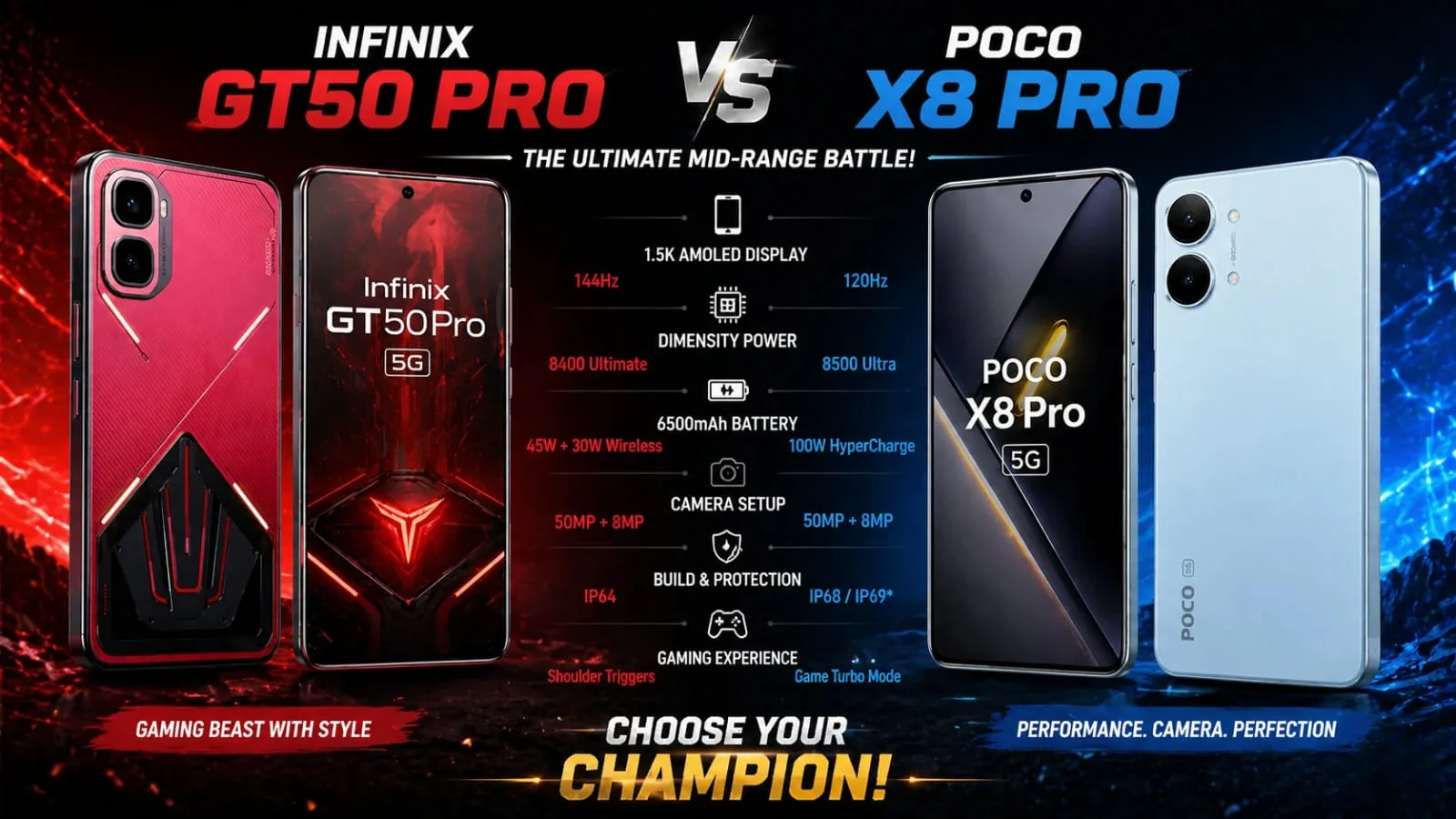
Infinix GT50 Pro vs POCO X8 Pro mid-range smartphone comparison feature image

The mid-range smartphone world is set to witness intense competition in 2026. Both the Infinix GT50 Pro and the POCO X8 Pro offer the perfect combination of gaming, battery life, and everyday use. If you’re looking for a phone between ₹30,000 and ₹45,000 that delivers flagship-like performance, this detailed comparison will help you choose the best option. Both phones feature large displays, 6500mAh batteries, powerful MediaTek Dimensity chipsets, and good camera setups. But there are several key differences between them – such as build quality, display brightness, gaming triggers, and charging speed. Let’s take a closer look. Price in India (April 2026) The Infinix GT50 Pro is expected to be priced between ₹35,000 and ₹38,000 for the 12GB + 256GB variant in India, while the 512GB model could be priced higher. The POCO X8 Pro starts at ₹32,999 for the 8GB + 256GB variant, while the 12GB RAM variant is available for ₹35,999–₹37,999, along with bank offers. POCO is known for delivering performance and value for its price. Comparison Table Feature Infinix GT50 Pro POCO X8 Pro Display 6.78″ 1.5K AMOLED, 144Hz, 4500 nits 6.59″ 1.5K AMOLED, 120Hz, 3500 nits Processor Dimensity 8400 Ultimate Dimensity 8500 Ultra RAM / Storage 12GB / 512GB 12GB / 512GB Rear Camera 50MP (OIS) + 8MP 50MP Sony IMX882 (OIS) + 8MP Front Camera 13MP selfie camera 20MP Selfie Camera Battery ~6500mAh 6500mAh Charging 45W + 30W wireless 100W HyperCharge Build & Protection IP64, Plastic, Gorilla Glass 7i IP68, Premium Feel Price ₹35,000 – ₹42,000 ₹32,999 – ₹37,999 Design and Build: A Comparison of Compact Powerhouses The Infinix GT50 Pro is specifically designed with gamers in mind. Weighing just 198 grams and measuring 8.2mm thick, the plastic frame and back make it lightweight and easy to use. It features Corning Gorilla Glass 7i protection. Highlights: Pressure sensitivity with dedicated shoulder triggers makes gaming smoother. Available in Red Blaze, Silver Glacier, and Black Abyss. With an IP64 rating, it resists light dust and water splashes. This smartphone features a 6.59-inch display, weighs 201.5 grams, and features an 8.4mm slim design. The device offers IP68 (IP69 in some variants) dust and water resistance, and offers up to IP69 protection in some variants. It offers excellent visual appeal and durability for everyday use and outdoor activities. Winner: The POCO X8 Pro takes the lead due to better protection and premium build, while the Infinix GT50 Pro offers a better gaming experience. Display: Brightness vs. Refresh Rate Display The screens of both smartphones are their hallmarks. The Infinix GT50 Pro features a 6.78-inch high-resolution 1.5K AMOLED display, which gives it a premium look and feel. The device boasts a 1208 x 2644 pixel resolution, a 144Hz smooth refresh rate, 330Hz touch response, and 4500 nits peak brightness. This device performs well for both gaming and watching movies. The device also features Gorilla Glass 7i protection with 230Hz PWM dimming. The large display provides an immersive content viewing experience. The POCO X8 Pro features a 6.59-inch 1.5K AMOLED display with a resolution of 1268 x 2756 pixels. It features a 120Hz refresh rate, 3500 nits peak brightness, Dolby Vision, HDR10+, and 3840Hz PWM dimming as its key advanced technologies. Wet Touch 2.0 provides smooth and improved touch response even with wet hands or in the rain. Winner: The Infinix GT50 Pro offers a smoother gaming experience due to its larger display and higher refresh rate, while the POCO X8 Pro is better in color quality and outdoor use. Camera: Daylight shots vs video and selfies Camera: Daylight shots vs. video and selfies camera The Infinix GT50 Pro features a 50MP main sensor (with OIS) and an 8MP ultrawide lens. The front camera features a 13MP camera, which delivers good detail and color in daylight. This smartphone supports 4K 60fps video recording, but the camera performs only averagely in low light. The POCO X8 Pro features a 50MP Sony IMX882 main camera with OIS and large 1.6μm pixels, along with an 8MP ultrawide sensor. The front camera is 20MP, perfect for clear selfies and smooth video calling. The POCO smartphone boasts better dynamic range, portrait mode, and 4K@60fps video quality, making it a strong contender. Winner: The POCO X8 Pro offers a great camera and selfie experience. Performance: Raw Power vs Stable Gaming Processor Performance is the most important aspect of both phones, determining the gaming experience. The phone is powered by the MediaTek Dimensity 8400 Ultimate (4nm) SoC, which powers the Infinix GT50 Pro. The device features a Mali-G720 MC6 GPU, along with 12GB of LPDDR5X RAM and fast UFS 4.1 storage. The HydroFlow liquid cooling system (6437mm² area) helps maintain stable temperatures during long gaming sessions. The N1 network chip provides strong signal and smooth connectivity, with minimal lag. The shoulder triggers are also provided with advanced customization features, with 8 mapping points and 10 levels of pressure sensitivity. Games like BGMI and COD Mobile offer stable performance at 90-120 FPS. The POCO X8 Pro phone is powered by an advanced and powerful chipset, the MediaTek Dimensity 8500 Ultra (4nm). The Mali-G720 MC8 GPU, 8GB/12GB of RAM, and UFS 4.1 storage deliver strong benchmark performance. HyperOS 3’s system optimizations elevate both sustained performance and multitasking. Game Turbo mode further enhances gaming. Winner: The POCO X8 Pro is superior in raw power and overall performance, while the Infinix GT50 Pro is a gamer favorite due to its gaming-specific features (triggers and cooling). Also Read :  iPhone 17 Complete Information – Is It Worth Buying? Battery Performance vs. Fastest Charging Support Battery and Charging: King? Both phones feature a large 6500mAh battery, which is quite impressive in this price range. The Infinix GT50 Pro smartphone offers 45W wired fast charging, along with 30W wireless and 10W reverse charging. Its liquid cooling system and efficient chipset provide a comfortable 1.5-day battery life. Wireless charging proves to be a convenient and practical feature for gaming users. The POCO X8 Pro features 100W HyperCharge, which takes the phone from discharge to full … Read more

iPhone 18 Pro Max vs iPhone 17 Pro Max: Best or Waste?

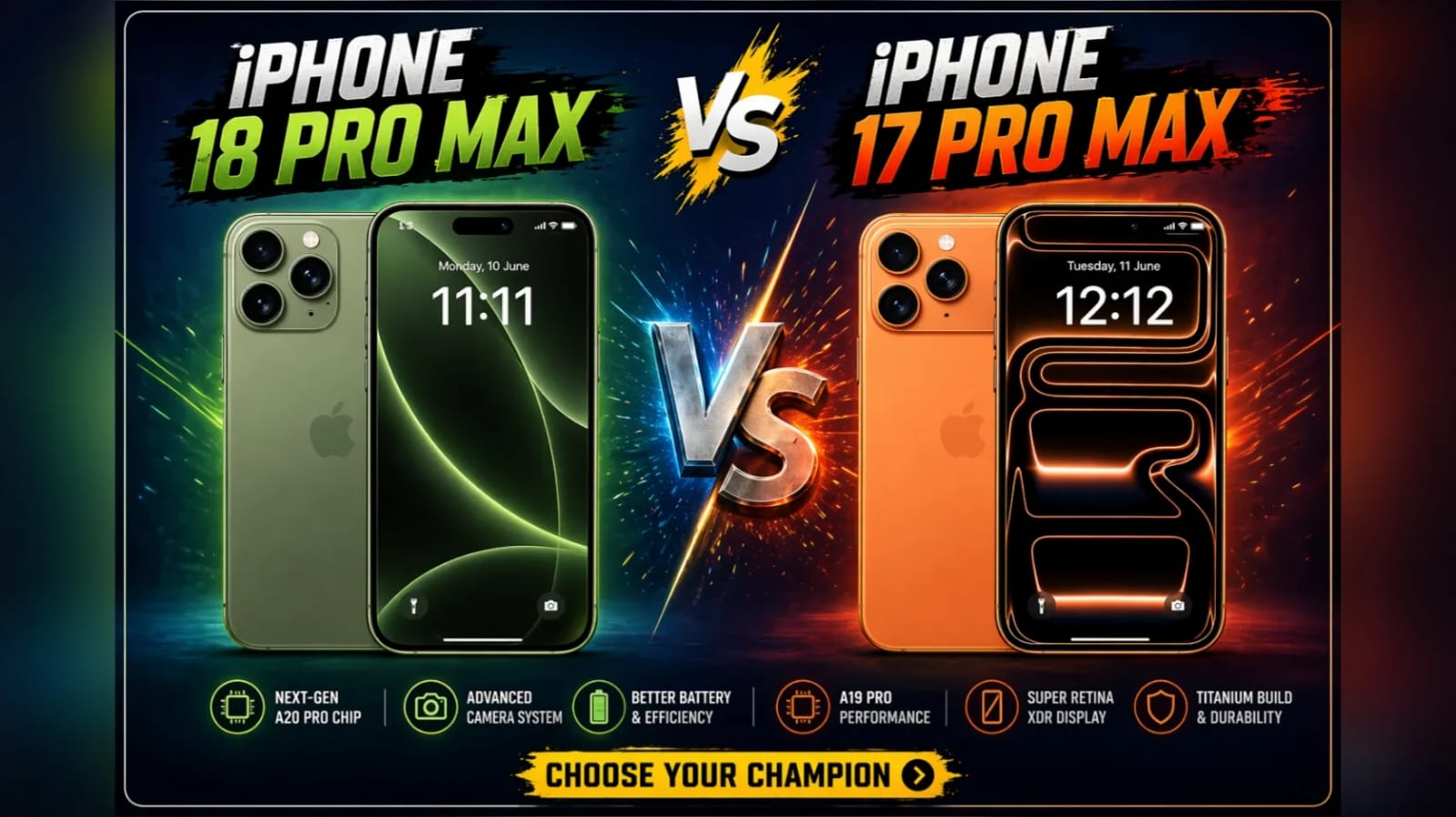
iPhone 18 Pro Max vs iPhone 17 Pro Max: Best or Waste?

Every September, Apple fans face a common question: should they upgrade their old phones or wait? But the gap between the iPhone 17 Pro Max and the iPhone 18 Pro Max has widened even further. Apple’s competition isn’t against companies like Samsung or Google anymore – it’s against its own previous iPhone models. Both the iPhone 18 Pro Max and iPhone 17 Pro Max feature titanium builds, 6.9″ displays, and iOS 20. The 18 Pro Max features a 1.6nm chip, 10x optical zoom, and a larger 42-hour battery – while the 17 Pro Max retains its 5x zoom and 3nm processor from the previous generation. Is this upgrade worth it at $1,299? Or is buying the 17 Pro Max a smart purchase? This simple comparison gives you the answer. Let’s put this debate to rest. Price & Availability Model Starting Price (256GB) Highest Storage iPhone 17 Pro Max $1,199 2TB ($1,899) iPhone 18 Pro Max $1,299 4TB ($2,199) Pre-order: September 12, 2026 | Release: September 19, 2026 (Expected) Apple has removed the iPhone 17 Pro Max from its official store; visit platforms like Amazon or Back Market to find discounts on it. Quick Overview – For the Social Media Scroller Feature iPhone 17 Pro Max iPhone 18 Pro Max Chip A19 Pro (3nm) A20 Pro (1.6nm) Display 6.9″ LTPO, 2000 nits 6.9″ Ultra Retina XDR, 3000 nits Main Camera 48MP (f/1.78) 50MP Stacked Sensor (f/1.6) Telephoto 12MP, 5x optical 48MP Periscope, 10x optical Battery Life Up to 29h video Up to 42h video Charging USB-C 35W USB-C 50W + 25W MagSafe RAM 8GB 12GB Starting Price $1,199 $1,299 (Expected) Design & Build – Titanium vs Titanium 2.0 Both phones use Grade 5 titanium, but the iPhone 18 Pro Max’s layered composite structure makes it 15% lighter and more scratch-resistant. iPhone 17 Pro Max: 221g | Thickness: 8.25mm | Action Button iPhone 18 Pro Max: 199g | Thickness: 7.8mm | Capture Button Color Options: iPhone 17 Pro Max: Blue Titanium, Natural Titanium, Black Titanium, White Titanium. iPhone 18 Pro Max: Silver Titanium, Deep Red Titanium, Matte Black Titanium, Gold Titanium. The result: The iPhone 18 Pro Max feels thinner and more premium. Mobile photography is now upgraded with the Capture Button. Display Feature iPhone 17 Pro Max iPhone 18 Pro Max Peak HDR Brightness 2000 nits 3000 nits (Expected) Outdoor Visibility Good in sun Visible even in desert sun (Expected) Always-On Display 1Hz down to 10Hz 1Hz with wallpaper color boost (Expected) Ceramic Shield Gen 2 Gen 4 (Expected 5x drop resistance) The iPhone 17 Pro Max and iPhone 18 Pro Max both feature stunning 6.9-inch ProMotion OLED display technology. But once you go outdoors, the difference is clear – the 18 Pro Max’s new 3000-nit peak brightness pales in comparison to the 17’s 2000-nit screen. Winner: iPhone 18 Pro Max – the brightest and toughest screen ever on a phone. Performance – A20 Pro (1.6nm) vs A19 Pro (3nm) This is where the real generational shift is evident. The iPhone 17 Pro Max (A19 Pro) features a 3nm processor, 20B transistors, a 6-core CPU, a 6-core GPU, and a 16-core Neural Engine. The iPhone 18 Pro Max (A20 Pro): 1.6nm, 35B transistors, an 8-core GPU, an 8-core CPU (2+6), and a 32-core Neural Engine. Real-world differences: App opening speed: 18 Pro Max 30% faster Heavy gaming results: The 17 Pro Max drops to 54fps after 20 minutes, while the 18 Pro Max runs at a consistent 60fps AI processing (on-device Siri, image generation): Approximately 2.2x faster Geekbench 6 scores: iPhone 17 Pro Max’s Geekbench scores: Single-core 3,200, multi-core 8,400 iPhone 18 Pro Max: Single-core 4,500, multi-core 12,100 Winner: Clearly, the iPhone 18 Pro Max wins by a wide margin. Perfect for AI, gaming, and upcoming iOS updates. Camera System Apple has combined the rear sensors into a single module. iPhone 17 Pro Max: Main camera setup: 48MP lens, f/1.78, sensor-shift technology support Ultra-wide lens: 12MP resolution with f/2.2 aperture Telephoto camera: 12MP sensor, 5x optical and 25x digital zoom capability iPhone 18 Pro Max: Primary camera: 50MP stacked sensor, 40% brighter photos with f/1.6 Ultra-wide camera: 48MP (f/1.8), 4cm macro detail Telephoto camera: 48MP periscope lens, 10x optical zoom and 100x digital zoom feature Night Mode: The iPhone 18 Pro Max captures up to 2 stops brighter photos with zero shutter lag. Video performance: 8K HDR is common to both, but the 18 Pro Max benefits from 4K@60fps cinematic mode, while the 17 only offers 1080p@30fps. Winner: iPhone 18 Pro Max – The zoom alone makes the iPhone 17 feel dated. Battery and charging The A20 Pro’s impressive efficiency and large battery cell = a real battery champion. The iPhone 17 Pro Max features a 4,850mAh battery, offering 22 hours of video playback, with 35W wired charging (0-50% in just 25 minutes) and 15W MagSafe support. The iPhone 18 Pro Max features a 5,250mAh battery, offering 32 hours of video playback, with 50W wired charging (0-50% in just 15 minutes) and 25W MagSafe support. Winner: iPhone 18 Pro Max – Delivers about 30% more battery life. Software & Exclusive Features Both devices come with iOS 20, but the 18 Pro Max’s 12GB of RAM (compared to 8GB) improves performance. AI features: Instant language switching in FaceTime calls Xcode AI: Create code on-device without internet access Augmented reality-based smart dashboard in Apple CarPlay 2.0 These updates may be rolled out gradually to the iPhone 17 Pro Max via cloud-based deployments. Winner: iPhone 18 Pro Max – The next step in AI is on-device technology. Which One Should You Buy? You own… Recommendation iPhone 15 Pro Max or older Upgrade to iPhone 18 Pro Max – massive leap in battery, camera, speed. iPhone 16 Pro Max Consider upgrade if you want 10x zoom or 2-day battery. iPhone 17 Pro Max No need to upgrade unless you’re a pro photographer or gamer. The 17 is still a beast. Android user Get the 18 Pro Max – best iPhone ever made. Final Verdict The … Read more

Google Pixel 10a vs. Pixel 9a: Which is better smartphone?

Google Pixel 10a vs 9a image

Comparing the Google Pixel 10a vs Pixel 9a and deciding which is the best smartphone is difficult, as the high-end smartphone market has become an industry where a completely new and improved version is launched every year. Companies tend to make minor improvements rather than major changes, leaving customers to determine what’s new based on specifications. Buying a new Google Pixel phone now means choosing between the two latest models: the Pixel 10a and Pixel 9a. Given the impressive features of both models, choosing one can be a difficult decision. This article provides a detailed comparison of the two smartphones to help you decide which one best suits your needs. Google Pixel 10a vs Pixel 9a Price in the Indian Market The Google Pixel 10a (256GB) is currently priced at ₹49,999 in the Indian market, while the Google Pixel 9a (256GB) is available for around ₹39,490. These prices are as of March 6, 2026, and are subject to change. Simply put, the Pixel 10a will be launched in India at ₹49,999 for the 256GB variant only. The Pixel 9a was also launched at the same price, but its price has now changed to around ₹39,999. This means that if you’re considering buying a phone today, there’s a difference of around ₹10,000 between the two, and this difference could sway your decision. The Pixel 10a is the newer model, but its lower price makes the Pixel 9a a more value-for-money option. Now the question is: are the Pixel 10a’s new features really worth paying ₹10,000 more? Read on to find out. Google Pixel 10a vs Pixel 9a: Specification Specification Google Pixel 10a Google Pixel 9a Display 6.3″ pOLED Actua, 120 Hz, 3000 nits peak brightness 6.3″ pOLED Actua, 120 Hz, 2700 nits peak brightness Glass Protection Gorilla Glass 7i Gorilla Glass 3 Processor Google Tensor G4 Google Tensor G4 Rear Camera 48 MP main + 13 MP ultrawide 48 MP main + 13 MP ultrawide Front Camera 13 MP 13 MP Battery 5,100mAh 5,100mAh Charging 30 W wired, 10 W wireless 23 W wired, 7.5 W wireless Build & Design Similar Pixel look Similar Pixel look Dimensions & Weight 9 mm thickness, 183 g 8.9 mm thickness, 186 g Durability IP68 water & dust resistance IP68 water & dust resistance Software Android 16 launch Android 15 launch AI / Extras Newer software features Core Pixel AI features Colours Lavender, Berry, Fog, and Obsidian Just Black, Clear White, and Purple RAM / Storage 8 GB RAM / 128 GB & 256 GB 8 GB RAM / 128 GB & 256 GB Price (India) ₹49,999 (256 GB) ₹39,999 (256 GB, discounted) Also Read: Best Camera Phones: Ultimate Imaging Power Devices 2026 Google Pixel 10a vs Pixel 9a Display. Simply put, the screens and designs of both phones are largely identical, but the Pixel 10a does have a few tweaks. Both feature a 6.3-inch 120Hz pOLED Actua display. This means scrolling will be smooth, animations will look fluid, and you will enjoy the same signature Pixel color experience. In terms of brightness, the Pixel 9a reaches 2,700 nits, while the Pixel 10a reaches 3,000 nits. Consequently, the 10a’s screen will be slightly clearer in bright sunlight. The design is also nearly identical, both have flat sides and front, with slightly rounded corners. There are also very minor design differences:Pixel 10a: 6.06 x 2.87 x 0.35 inches;Pixel 9a: 6.09 x 2.89 x 0.35 inches. In terms of weight, both devices are almost identical – the 10a weighs approximately 6.5 ounces, while the 9a weighs 6.6 ounces. This means you will not notice a significant difference when holding it. The Pixel 10a offers Gorilla Glass 7i protection, while the 9a offers Gorilla Glass 3. This means the 10a offers slightly better protection against scratches and light drops. The Pixel 10a slightly excels in durability. In real life, these fluctuations are small but significant. Google pixel 10a vs pixel 9a Colours difference The Google Pixel 9a will be available in three colors (Just Black, Clear White, and Purple), while the Google Pixel 10 will be available in four colors (Lavender, Berry, Fog, and Obsidian). Also Read : Samsung Galaxy S26 Ultra 5G: 5000mAh battery, Snapdragon 8 Elite Gan 5, 200MP Camera. Google Pixel 10a vs Pixel 9a Camera Simply put, Pixel phones have always focused on providing users with the highest quality photos possible. The Pixel 10a features almost the same camera setup as the 9a – because why change what already works so well? On the rear, there is a 48MP main camera with OIS (optical image stabilization), along with a 13MP ultra-wide camera. A 13MP selfie camera is provided on the front. If there is any difference, it will be more in the software than the hardware. The Pixel 10a’s image processing may be slightly new and improved, which could lead to slight improvements in color, detail, and low-light photos. Simply put, if you were expecting a new sensor or a larger camera upgrade, you will not see much of that this time around. Both phones share the same dual rear camera (main + ultra-wide), and Google’s software is the real strength. Photos are clear and colorful during the day, and Night Sight helps capture good photos at night as well. Overall, the Pixel 10a may have minor software improvements, but the Pixel 9a still offers a great camera today. Pixel 10a: 48MP main + 13MP ultrawide;Pixel 9a: 48MP main + 13MP ultrawide. Google Pixel 10a vs Pixel 9a Design The Google Pixel 10a and Pixel 9a share a very similar design. Both offer a smart, simple, and premium feel. Both have flat front screens, flat sides, and slightly rounded corners, making them comfortable to hold. This also reduces the risk of drops. If you were expecting a major or bold redesign, you wouldn’t see any. Both the Pixel 9a and 10a have a similar look – a plastic back, an aluminum frame, and a clean, simple Pixel look. There is a slight difference … Read more