
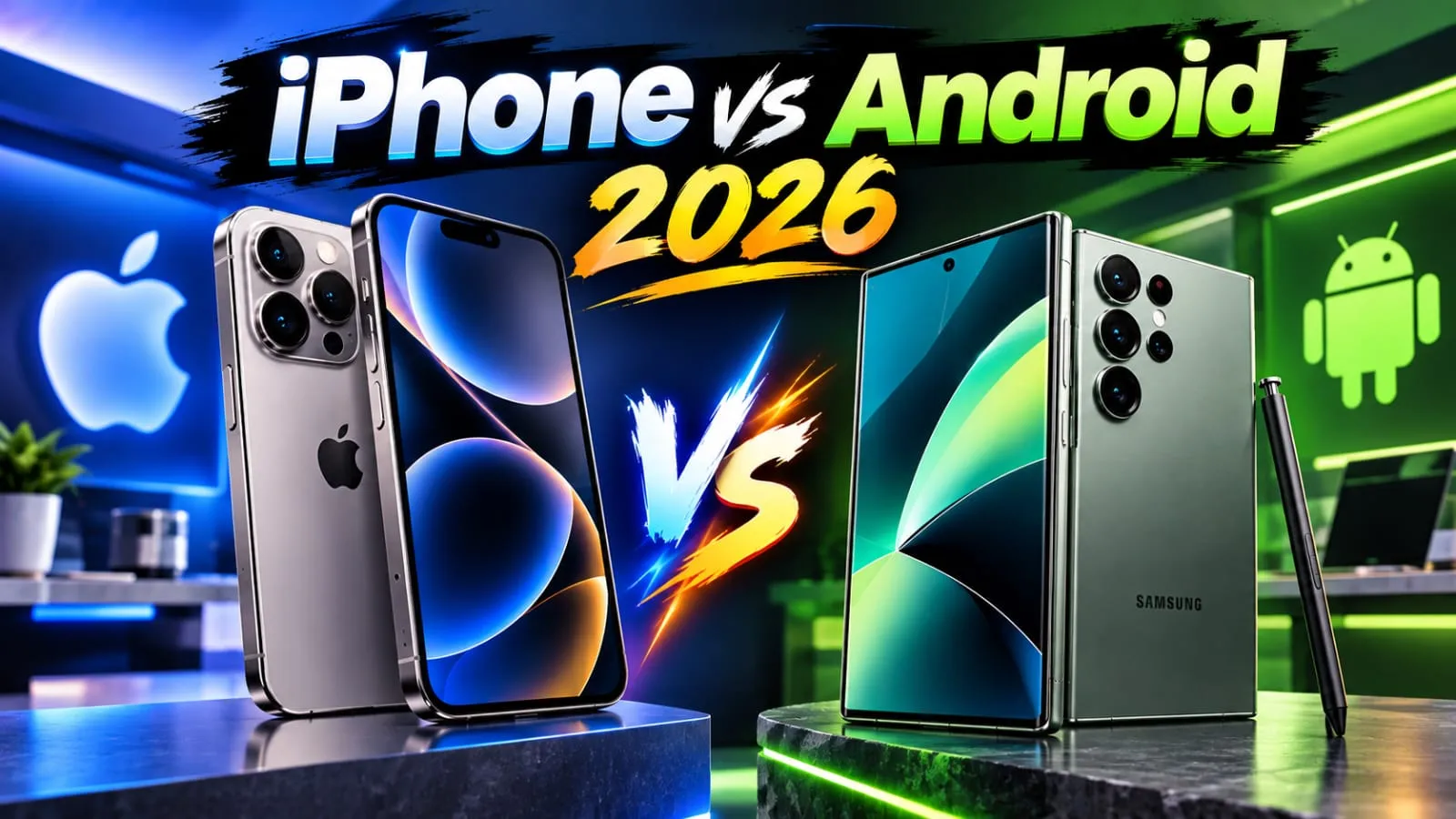
Hey buddy, if you’re feeling stuck this year between getting an iPhone and sticking with Android, trust me, you’re not the only one. Every year, the iPhone vs Android 2026 debate comes back, and honestly, there’s never a clear winner.
In my experience, both sides have their loyal fans who truly believe their phone is the best. So, without blindly choosing a side, let’s compare things honestly and see what each offers this year and which one is better for you.
In This Article
ToggleiPhone vs Android 2026 – Why Is This Debate Still Alive?
Tell me the truth: you have probably heard this same argument from friends and family for years now.
This year, Apple launched the iPhone 18 Pro with its new A20 Pro chip, better cameras, and deeper Apple Intelligence features. On the other side, Android brands like Samsung, Google, Xiaomi, and OnePlus have pushed out flagships with massive batteries, faster charging, and powerful AI tools of their own.
So basically, both platforms have leveled up significantly, which honestly makes the iPhone vs Android comparison 2026 even more interesting than before.
iPhone vs Android Price and Features in USA and India
Now let’s talk about something practical: your budget.
In the USA, the iPhone 18 Pro starts around $1,199, which is genuinely expensive for most regular buyers. Meanwhile, Android flagships like the Samsung Galaxy S26 series or Google’s Pixel lineup often offer similar or even better specifications at a slightly lower starting price.
In India, the story is quite similar. Apple’s iPhones sit firmly in the premium segment, while Android gives you options at nearly every price point, from budget phones under Rs 15,000 to flagship killers competing directly with Apple.
- iPhone: Fewer models, but consistent quality across the lineup
- Android: Huge variety, from ultra-budget to ultra-premium options
If you think as I do, this is where Android genuinely wins for buyers who want more choices within their budget.
iOS vs Android 2026 – Which Software Feels Better?
This part usually comes down to personal preference, buddy.
iOS remains a closed, tightly controlled ecosystem. Apple keeps things simple, secure, and consistent across devices. iPhones also receive software updates for around five to six years, which is genuinely one of Apple’s biggest strengths.
Android, on the other hand, offers far more customization. You can change launchers, tweak settings deeply, and personalize your phone in ways Apple simply does not allow.
Here is an honest comparison:
- iOS Pros: Long software support, smoother security patches, consistent experience
- iOS Cons: Limited customization, higher repair costs
- Android Pros: More customization, wider hardware options, competitive pricing
- Android Cons: Update timelines vary a lot between brands
In my experience, if you like things simple and consistent, iOS feels comforting. If you enjoy control over every little setting, Android feels more like home.
iPhone vs Android Camera, Battery and Performance Comparison
Now let’s get into the technical side that actually affects daily use.
Camera Performance
The iPhone 18 Pro brings a 48MP Fusion Main camera with variable aperture, giving photographers better control over depth and low-light shots. However, Android flagships like the Samsung Galaxy S26 Ultra come with a massive 200MP camera sensor, which technically offers more detail in ideal conditions.
Tell me the truth: more megapixels do not always mean better photos, since software processing plays a huge role too. Both platforms genuinely take excellent photos in good lighting, and the real difference mostly shows up in extreme low light or heavy zoom situations.
Battery Life
This is honestly one area where Android often pulls ahead. Some Android flagships now pack batteries as large as 7,500mAh, compared to Apple’s more modest battery capacities. However, Apple compensates with tighter software optimization, so real-world battery backup often feels closer than the raw numbers suggest.
Performance
Apple’s custom chips have traditionally led in raw processing power, and the new A20 Pro chip continues that trend. However, Android flagships using chips like Snapdragon 8 Elite Gen 5 or Dimensity 9500 have closed the performance gap significantly, especially for gaming and multitasking.
Which One Should You Actually Buy in 2026?
If you think as I do, the real answer depends entirely on what matters most to you personally.
Choose iPhone if you want:
- Long-term software updates
- A simple, consistent user experience
- Strong resale value
- Deep integration with other Apple devices
Choose Android if you want:
- More budget flexibility
- Greater customization options
- Bigger batteries and faster charging
- More hardware variety to choose from
In my experience, most people who already own other Apple devices tend to stick with iPhone for the smooth ecosystem experience. Meanwhile, people who love trying new features and want more value for their money often lean toward Android.
Final Thoughts on iPhone vs Android 2026
To sum it up honestly, this iPhone vs Android 2026 debate does not really have one universal winner. Apple offers a polished, secure, and long-lasting experience, while Android offers flexibility, variety, and often better value for money.
Now let’s talk about you. Are you team iPhone for the smooth ecosystem, or team Android for the freedom and choices it gives you?
Disclaimer: This article is based on publicly available information and general market trends at the time of writing. Prices, specifications, and features may vary by region and change over time. Please check official Apple and Android manufacturer websites for the latest and most accurate details before making a purchase.
Latest Post
FAQ's
Which is better in 2026, iPhone or Android?
Neither is universally better, since iPhone suits users wanting a simple ecosystem, while Android suits those wanting variety and customization.
Does iPhone have a better camera than Android in 2026?
iPhone offers excellent photo processing, but some Android flagships now include higher megapixel sensors, making both genuinely competitive choices.
Why do Android phones have bigger batteries than iPhones?
Android brands prioritize larger battery capacities, while Apple focuses more on software optimization for efficient real-world battery performance.
Is Android cheaper than iPhone in the USA and India?
Yes, Android offers phones across nearly every price range, while iPhones remain positioned mainly in the premium price segment.
How long do iPhones get software updates compared to Android?
iPhones typically receive updates for five to six years, while Android update timelines vary significantly depending on the brand.

Samshul Ansari is the Co-founder and author of Techallrounder.com. He covers the latest technology news, smartphone and laptop reviews, gadget comparisons, buying guides, and tech tips. His goal is to provide accurate, easy-to-understand, and up-to-date information that helps readers make better technology decisions.