
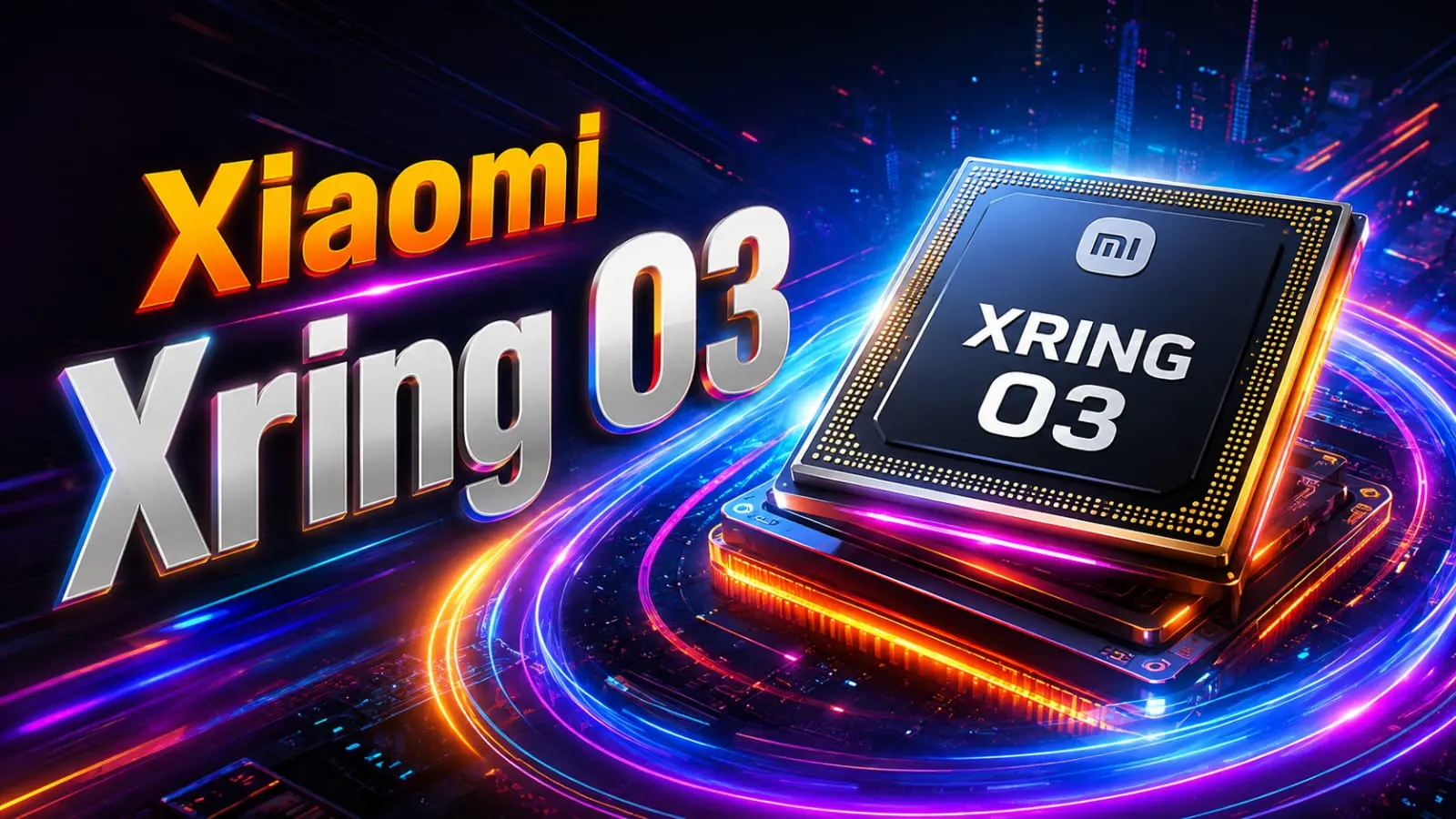
Hey friend, have you heard any news about the Xiaomi Xring O3 recently? If you follow phone news as I do, you probably already know that Xiaomi is no longer just making phones. They are now also making their own chip for phones, and that chip is called the Xiaomi Xring O3.
I remember when Xiaomi launched its first in-house chip, the Xring O1, last year. To be honest, I had questions in my mind. I thought, ‘Can a phone company really make a chip that can compete with Snapdragon and Dimensity?’ But the O1 surprised me with its speed and battery life. Now the Xiaomi Xring O3 is coming out, and honestly, this one sounds even more exciting.
In this article, I’ll explain everything about the Xiaomi Xring O3 in really simple words. No complicated tech terms, just plain stuff, like I’m telling a friend over tea.
In This Article
ToggleHighlights
- Xiaomi Xring O3 skips the O2 name and jumps straight from O1 to O3.
- Built on TSMC’s advanced 3nm process
- Prime core crosses the 4GHz mark for the first time.
- New three-cluster CPU design (Prime, Titanium, Little cores)
- GPU speed jumps by around 25% compared to the O1
- Expected to power the upcoming Xiaomi MIX Fold 5
What Is the Xiaomi Xring O3?
The Xiaomi Xring O3 is Xiaomi’s own processor, made completely in-house. Most phone brands use chips from Qualcomm or MediaTek. But Xiaomi wants full control over speed, power use, and how the chip works with its HyperOS software.
Interesting thing, buddy: Xiaomi has skipped the O2 name completely. So after the O1, we go straight to the Xiaomi Xring O3. This shows Xiaomi wanted to make a big jump, not just a small update.
Xiaomi Xring O3 Processor Specifications You Should Knowx
Now let’s talk about the real numbers. Based on leaks and reports so far, here is what the Xiaomi Xring O3 chip looks like:
- Manufacturing process: TSMC 3nm (the same advanced node used in top chips today)
- CPU design: A brand-new three-cluster setup with Prime, Titanium, and Little cores, dropping the old “big core” cluster
- Prime core speed: Around 4.05GHz, crossing the 4GHz barrier for the first time in a Xiaomi chip
- Little core speed: Boosted heavily, almost 60% faster than the O1’s mid-tier cores
- GPU: Likely based on Arm’s newer Mali graphics design, with clock speed jumping from 1.2GHz to almost 1.5GHz
- Memory bandwidth: Staying strong at 9600 MT/s
In my experience, when a company redesigns the whole CPU cluster instead of just bumping clock speed, it usually means they are aiming for something big, not a small yearly update.
Xiaomi Xring O3 Performance and Benchmark Expectations
Here is where it gets exciting. The Xiaomi Xring O3 performance is expected to beat the older Xring O1 by a good margin, especially in daily tasks like browsing, chatting apps, and short videos, because the little cores are now much stronger.
For heavy gaming and multitasking, the boosted GPU should help a lot too. Still, it’s better for you to know the whole truth. Full official benchmark scores are not out yet. Everything right now is based on leaks and code analysis, not Xiaomi’s official numbers. So take the performance claims with a little caution until real reviews come out.
When Is the Xiaomi Xring O3 Launch Happening?
This is the question everyone is asking me. Based on model number clues and industry reports, the Xiaomi Xring O3 launch is expected around August 2026, most likely tied to Xiaomi’s own company event.
The chip is tipped to first appear inside the Xiaomi MIX Fold 5, a foldable phone with a passport-style wide design. Sadly for us, buddy, early reports suggest this chip and device may launch only in China first, without full global 5G band support. So India and other markets might have to wait, or may not get this exact chip at all in the first phone.
Xiaomi Xring O3 AI Performance and Power Efficiency
Xiaomi is also pushing the Xiaomi Xring O3 AI performance angle strongly. Reports suggest a big jump in energy efficiency compared to the O1, which is good news for battery life. If you think as I do, a fast chip is useless if your battery dies by evening. So this efficiency focus really matters for daily users.
Xiaomi Xring O3 vs Snapdragon and Dimensity: Should You Care?
Now the honest part. Even with all these upgrades, the Xiaomi Xring O3 is still built on the same 3nm node that Qualcomm’s current flagship uses. The next Snapdragon and Dimensity chips are expected to move to an even newer 2nm process. So on paper, Xiaomi may still be one step behind the very latest silicon race.
That said, raw specs are not everything. If Xiaomi tunes this chip well with HyperOS, real-world smoothness can still feel excellent, just like the O1 did last year.
Is the Xiaomi Xring O3 Worth the Hype?
Tell me the truth, buddy, would you buy a phone just because it has a self-made chip? For me, it depends on real performance, not just marketing talk. The Xiaomi Xring O3 looks promising on paper, with a smarter core design and better efficiency. But since it is still based on leaks, I would say wait for the official launch and real benchmark tests before forming a final opinion.
Disclaimer
This article is based on leaks, industry reports, and unofficial information available till the date of writing. Official specifications, launch date, and performance numbers may change once Xiaomi makes an official announcement. Please verify details from Xiaomi’s official sources before making any purchase decision.







FAQ's
What is the Xiaomi Xring O3?
It is Xiaomi’s own in-house smartphone chip, built to replace external processors like Snapdragon, focusing on speed, power efficiency, and tight software integration.
When will the Xiaomi Xring O3 launch?
Reports point to an August 2026 launch, likely with the Xiaomi MIX Fold 5, though Xiaomi has not officially confirmed the exact date yet.
Which phone will use the Xiaomi Xring O3 chip first?
Leaks suggest the Xiaomi MIX Fold 5, a foldable phone with a new passport-style design, will be the first device with this chipset.
Is the Xiaomi Xring O3 faster than the Xring O1?
Yes, leaks show a redesigned CPU, higher clock speeds, and a stronger GPU, making the Xring O3 noticeably faster than the older Xring O1 chip.
Will the Xiaomi Xring O3 be available in India?
Early reports suggest the first device may launch in China only, without global 5G bands, so Indian availability is currently uncertain.

Samshul Ansari is the Co-founder and author of Techallrounder.com. He covers the latest technology news, smartphone and laptop reviews, gadget comparisons, buying guides, and tech tips. His goal is to provide accurate, easy-to-understand, and up-to-date information that helps readers make better technology decisions.