Tech all rounder

iQOO Neo 10: Complete Details, Price, and Honest Review
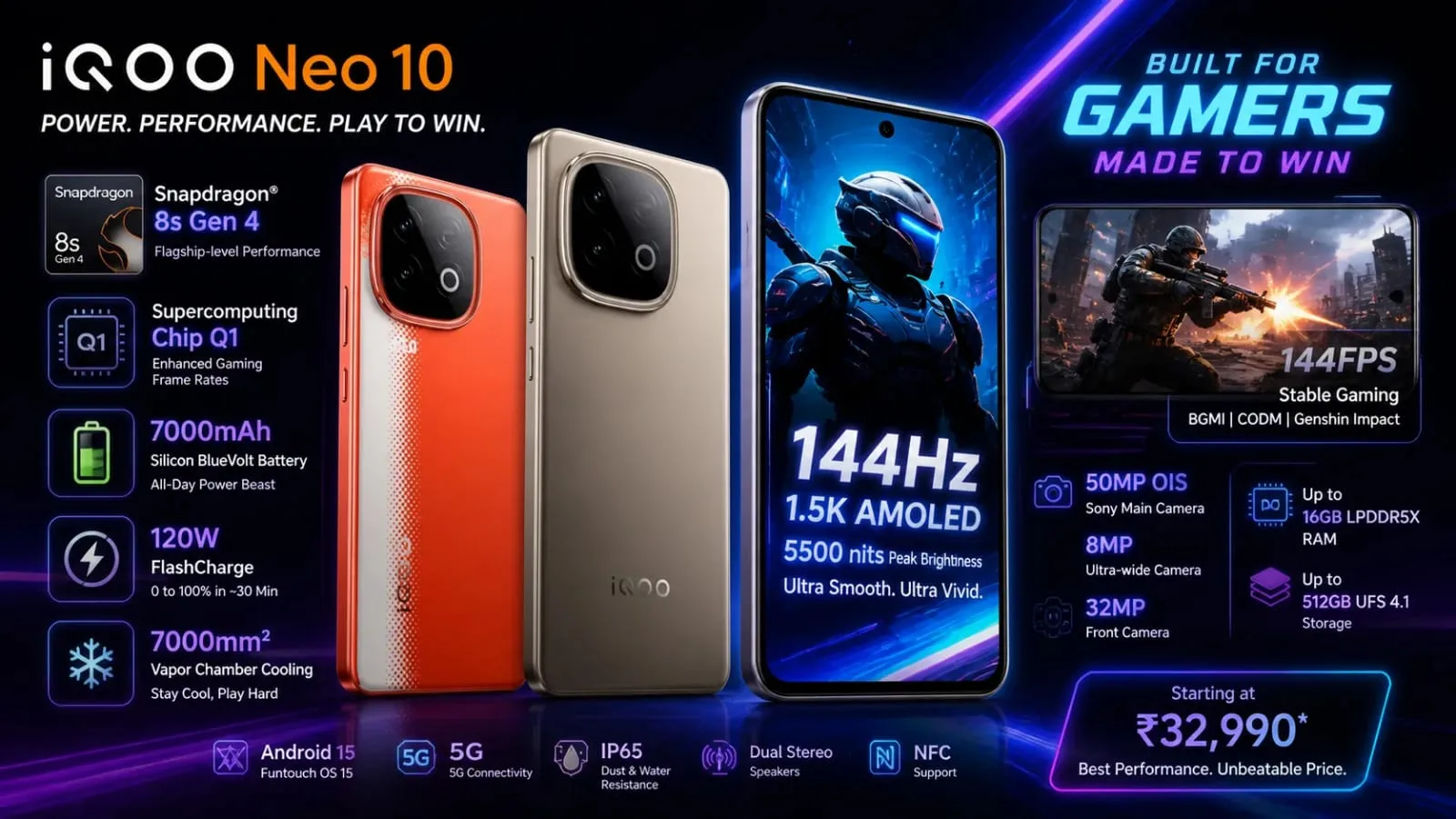
iQOO Neo 10 premium smartphone feature image

So, friends, if you are on the hunt for a smartphone that isn’t exorbitantly expensive, one that won’t put a heavy strain on your wallet yet delivers phenomenal performance for gaming, daily usage, and multitasking, then let me introduce you to the iQOO Neo 10. I distinctly remember that last year, while I was engrossed in a long gaming session of BGMI, my old phone suddenly started lagging, a frustrating experience that left me grappling with numerous difficulties! That very moment, I resolved that I would acquire a mid-range phone specifically focused on performance and, furthermore, that I wouldn’t let anyone else make the mistake of buying the wrong device. Since then, I began my quest for such a phone, and then, around April 2026, the iQOO Neo 10 launched in India, offering performance that rivals flagship-level devices. So, without any unnecessary hype, let’s take a comprehensive look at all the details. Highlight key Processor: Qualcomm Snapdragon 8s Gen 4, paired with the Supercomputing Chip Q1 for enhanced gaming frame rates. Display: 6.78-inch 1.5K AMOLED, featuring a refresh rate of up to 144Hz and high peak brightness (reaching up to 5500 nits in HDR conditions). Battery: Large 7000mAh Silicon BlueVolt battery with 120W fast charging support. Camera: 50MP Main (Sony sensor with OIS) + 8MP Ultra-wide rear setup; 32MP front camera. RAM/Storage: Options available with up to 16GB of LPDDR5X RAM and 512GB of UFS 4.1 storage. Design: A slim profile of approximately 8.1mm, weighing around 206g, featuring dual-tone finishes such as Inferno Red or Titanium Chrome. It also incorporates a large vapor chamber cooling system (covering an area of approximately 7000mm²) to ensure the phone remains cool during extended gaming sessions. Why Does the iQOO Neo 10 Stand Out? We all know one thing: while some smartphone companies make grand promises, they often fail to deliver, sometimes not even fulfilling half of what they pledged. Be honest, haven’t we all found ourselves in a situation where, after hearing great things about a phone and purchasing it based on that trust, the device failed to live up to its claims, leaving us at a loss?  The iQOO Neo 10 feels distinct because it prioritizes the features that matter most to the majority of users: long battery life, smooth performance, and a brilliant, high-quality display. This phone makes no attempt to position itself as a camera-centric flagship or an ultra-premium luxury device. Instead, it is designed for users, particularly those who engage in gaming or heavy multitasking, who are seeking a reliable smartphone without having to spend upwards of ₹50,000. In my experience, phones in this segment often fall short in certain areas, such as battery life or thermal management. However, this device will surprise you with its hardware choices. That said, several other phones released this month also offer impressive, long-lasting battery life. iQOO Neo 10: Price and Launch Details in India The iQOO Neo 10 price in India starts at around ₹32,990 for the 8GB + 128GB variant. The options for other variants are as follows: 8GB + 256GB: ₹38,89912GB + 256GB: ₹42,99916GB + 512GB: ₹44,889 (With potential launch discounts, via card offers or other bank promotions, you can save up to ₹2,245, bringing the price of the base variant down to ₹31,340). 12GB + 256GB: ₹ 42,999. This variant is currently available for purchase on Flipkart as well as on the official iQOO website. It was launched in India on April 26, 2026, and became available for sale on Amazon and the iQOO website immediately thereafter. Prices may vary across different variants depending on applicable bank offers, so be sure to check for any available deals or discounts. If gaming and battery life are your top priorities, this phone could prove to be an excellent deal for you at this price point. If you share my perspective, spending less than ₹35,000 in 2026 for a phone featuring a Snapdragon 8s Gen 4 processor and such a powerful battery seems like a very sensible decision. iQOO Neo 10 Specifications Category Details Design Slim ~8.1mm, ~206g, dual-tone finish Display 6.78-inch 1.5K AMOLED, 144Hz refresh rate Peak Brightness Up to ~5500 nits (HDR) Rear Camera 50MP Sony main + 8MP ultra-wide Front Camera 32MP selfie camera Video Recording 4K recording (main camera) Processor Snapdragon 8s Gen 4 + Supercomputing Chip Q1 Software Android 15 with Funtouch OS 15 Battery Massive 7000mAh Silicon BlueVolt battery Fast Charging 120W FlashCharge support Battery Backup 10+ hours screen-on time (mixed use) RAM/Storage Up to 16GB LPDDR5X + 512GB UFS 4.1 Gaming Performance Up to 144FPS support + stable cooling system Cooling System ~7000mm² vapor chamber cooling Price (India) Starts ₹32,990 (discounts reduce further) Also Read :  iPhone 17 Complete Information – Is It Worth Buying? Display, Design & Build Quality iQOO Neo 10: Display, Design & Build Quality The iQOO Neo 10 sports a flat 6.78-inch AMOLED panel with 1260 x 2800 resolution (1.5K). It supports up to 144Hz refresh rate for smooth scrolling and gaming, with excellent touch sampling. Brightness goes high enough for outdoor use, and it has good color vibrancy typical of AMOLEDs. Design-wise, it’s slim and comfortable to hold despite the big battery. The back has a dual-tone look inspired by higher-end models. Build feels decent with an IP65 rating – it handles splashes and dust better than many in this range, but don’t go swimming with it. One small gripe: the plastic back might not feel as premium as glass, but it keeps the weight manageable. I like how it doesn’t slip easily from my hands during quick calls. Camera Features Camera Quality Let’s be honest about the cameras on the iQOO Neo 10. The 50MP main sensor (Sony IMX882 or similar with OIS) does a solid job in good lighting. Colors look natural, details are sharp for social media, and stabilization helps with handheld shots or videos. The 8MP ultrawide is average – usable in bright conditions, but expect softer edges and less detail in low light. Selfies … Read more


Vivo TWS 5i: Superb Audio – Should You Buy or Avoid in 2026?

Vivo TWS 5i earbuds feature image with premium design and superb audio quality for 2026

Vivo continues expanding its personal audio collection by introducing the Vivo TWS 5i true wireless earbuds in China. This fresh model serves as a budget-friendly choice designed for users who want dependable performance for daily activities without paying premium prices. In a world where people constantly shift between streaming playlists, joining virtual meetings, playing quick mobile games, and watching short videos, having earphones that handle multiple tasks smoothly becomes genuinely helpful. The TWS 5i focuses on core strengths like extended playtime, clear sound delivery, and convenient connectivity, making wireless listening feel more approachable for a wider audience. Highlight key Long Battery Life: Up to 50 hours total playback with the case. Perfect for daily use without frequent charging. 10mm Dynamic Driver: Delivers clear vocals and balanced bass. Great for music, calls, and video streaming. Bluetooth 5.4: Ensures stable and fast connectivity. Also supports dual-device pairing. 42ms Low Latency: Ideal for gaming and video watching. Audio stays in sync with on-screen action. Fast Charging: Just 10 minutes gives 4+ hours of playback. IP54 Rating: Ensures safety from dust and limited water contact. Pricing and Current Availability In the Chinese market, the Vivo TWS 5i carries a friendly price tag of CNY 119, which converts to approximately Rs. 1,600 or about $17, depending on exchange rates and taxes. This positions the earbuds firmly in the entry-level category, making quality wireless audio reachable for many more people. Purchases are currently possible through the official Vivo China website. Broader international availability, including potential launches in markets like India, may follow based on regional demand and distribution plans. Early adopters outside China might explore import routes, though warranty and full software support could vary. Vivo TWS 5i: Specifications Category Details Product Name Vivo TWS 5i Category Budget True Wireless Earbuds Launch Market China Price CNY 119 (~₹1,600 / $17) Total Battery Life Up to 50 Hours (with case) Single Charge Playback Up to 11.5 Hours Fast Charging 10 min = 4+ Hours Playback Driver Size 10mm Dynamic Driver Sound Profile Balanced Audio with Clear Vocals & Bass Audio Technology DeepX 3.0 + Spatial Audio Supported Codecs AAC, SBC, LC3 Bluetooth Version Bluetooth 5.4 Connectivity Features Dual Device Pairing Low Latency Mode 42ms (Gaming & Video Sync) Noise Control No ANC, AI Call Noise Reduction Water & Dust Resistance IP54 Rating Weight 4.2g per Earbud Colors Available White, Black, Sky Blue Compact Design Built for Everyday Carry Compact Design Built QualityQuality Physical attributes emphasize portability and durability. Each earbud measures about 31.4 × 21.9 × 23.2 mm and weighs roughly 4.2 grams, keeping them light enough for extended wear without discomfort. The charging case dimensions sit at 63 × 47.8 × 28.1 mm, with the complete set totaling around 42 grams. These sizes slip easily into pockets or small bags. An IP54 rating provides protection against dust ingress and water splashes, offering peace of mind during light exercise, walks in drizzle, or accidental exposure to moisture. The ergonomic shape, combined with appropriate ear tips, should help achieve a secure yet comfortable fit for most users, though trying them personally remains the best way to confirm individual suitability. Color options available at launch include White Space, Ink Black, and Sky Blue. These selections range from clean and professional to subtly expressive, suiting various personal styles and occasions. Why the Vivo TWS 5i Matters in Vivo’s Lineup Vivo launched the standard TWS 5 and the more advanced TWS 5 Hi-Fi models back in October 2025. Those versions came with larger 11mm drivers, active noise cancellation reaching up to 60dB in some configurations, and extra codec support, including high-resolution options like LDAC and LHDC on the Hi-Fi variant. The new Vivo TWS 5i takes a different path by keeping things simpler and more accessible. It deliberately skips hardware-heavy features such as ANC to prioritize battery longevity and keep costs low, while still bringing modern touches like Bluetooth 5.4 and spatial audio support. This positioning allows Vivo to address different user segments effectively. Enthusiasts seeking deeper immersion or stronger isolation might lean toward the higher models, but students, commuters, or casual listeners on limited budgets can find the 5i sufficient for most real-world situations. Sound Quality Focused on Balance and Clarity Sound Quality Focused on Balance and Clear voicdevoice Central to the listening experience sits a 10mm dynamic driver paired with a PU + PEEK polymer diaphragm. This material selection helps the driver move efficiently, producing sound that aims for natural reproduction rather than artificial exaggeration. Vivo’s Golden Ear Acoustics team performed the final tuning, targeting a well-rounded signature: enhanced low-end presence for rhythm, articulate mids for vocals and dialogue, and refined highs for detail without causing fatigue during longer sessions. DeepX 3.0 stereo sound processing works behind the scenes to create a sense of width and depth. Spatial audio support adds another layer of engagement, particularly useful when consuming movies, series, or games that take advantage of directional cues. Listeners can choose from several preset modes inspired by different environments-such as theater for cinematic scale, concert hall for live energy, recording studio for precision, or other options that adjust emphasis according to content type. These choices give quick customization without requiring deep technical understanding. The earbuds handle common audio codecs, including AAC, SBC, and LC3. While they do not reach the highest resolution levels found in pricier alternatives, this combination still delivers solid quality for streaming platforms like Spotify, YouTube, or Apple Music in typical usage. The overall presentation stays balanced, avoiding overly boomy bass or piercing treble that could tire the ears quickly. Note that the Vivo TWS 5i does not include active noise cancellation. Instead, it relies on passive isolation from the ear tip fit and applies AI-based call noise reduction with wind suppression. This software approach helps maintain clearer conversations in moderately noisy settings like offices, streets, or public transport without draining extra battery or increasing the price significantly. Also Read :  iPhone 17 Complete Information – Is It Worth Buying? Connectivity That Supports Busy … Read more

OxygenOS 17: Powerful Features You’ll Love or Hate

The biggest software revolution for OnePlus users is coming in 2026 – OxygenOS 17. Based on Android 17, it will make OnePlus phones smoother and more powerful than ever. Whether you’re using the OnePlus 15, OnePlus 13, or an older flagship smartphone, this update brings significant improvements to performance, AI features, battery life, and the daily experience. OxygenOS has been praised for its simple design, fast performance, and stock Android-like experience. In OxygenOS 17, OnePlus has focused primarily on performance. It features smooth and fluid animations, improved CPU optimization, fewer frame drops, and smart AI technology. If you’re using a OnePlus phone or planning to buy a new one, this article is essential for you. What is OxygenOS 17? Full features and launch date revealed OxygenOS 17 is a modern custom Android skin based on Android 17. Google started Android 17 development early, so OnePlus has also picked up the pace. According to Tech Update, OnePlus 15 users will have access to Android 17 Beta 2 in April 2026. The rollout of OxygenOS 17 is expected to begin between June and July 2026. Flagship devices like the OnePlus 15 series will receive the update first, followed by support for other smartphones. OnePlus also provided an early update to Android 16 last year, so OxygenOS 17 is expected to arrive soon. What is OxygenOS 17? The new OxygenOS 17 primarily aims to deliver significant improvements in performance and fluidity, delivering a smoother experience. Improved animations, reduced frame drops, and improved CPU/GPU management significantly improve phone speed and responsiveness. Performance will remain unchanged even during prolonged gaming or multitasking. The company has improved system optimizations to balance battery efficiency and performance. OxygenOS 17 will feature smart integration of AI features, making AI more helpful and less interruptive. Homescreen apps are automatically shifted to the correct category using artificial intelligence. Privacy is improved by processing data on-device. Next-generation smart suggestions system Improved AI Eraser and video editing tools. In the future, AI will not only be a feature, but will become a necessary tool to simplify everyday tasks. The new update focuses on battery and charging optimization, improving charging and battery performance. Smart battery saving modes, improved CPU scheduling, and background process control will maximize battery life. This combination, combined with OnePlus’ fast charging technology, allows users to enjoy uninterrupted use throughout the day. The camera and media experience will receive significant improvements, including improved zoom transitions, editing tools, and video stabilization. Color accuracy and brightness management for media consumption (videos and photos) will be further improved. OxygenOS is known for its simplicity and clean design when it comes to customization and user interface. The new OxygenOS 17 features advanced customization, improved quick settings, a refined notification shade, and a lightweight design. Select users can benefit from high-level customization settings like Good Lock. OnePlus has taken privacy and security to a new level with Android 17’s advanced security features. Improved app lock, new private space and permission management features will give users more control. Primary eligible devices: OnePlus 15 Series / 15R • OnePlus 13 Series (13 / 13R / 13T) OnePlus 12 Series (12 / 12R) OnePlus 11 lineup OnePlus Open (Foldable Smartphone) Selected Nord Smartphones For older flagships and devices like the OnePlus Open, OxygenOS 17 will be the last major OS update. After that, only security updates will be supported. OnePlus typically provides 4-5 years of OS updates and 5-6 years of security updates, though this may vary by model. What’s new between OxygenOS 17 and OxygenOS 16? OxygenOS 16 was already very smooth. But OxygenOS 17 takes it to a higher level– Smoother UI and less lagging experience Advanced use of AI features Improvements to battery performance and thermal control Improvements to camera and media quality In OxygenOS 17, you’ll get a lighter and smoother “breathing” experience, while AI features make it even more user-friendly. How to install OxygenOS 17 on your phone? Go to Settings > About Phone > OxygenOS Version to check. You’ll receive a notification as soon as the update arrives. Download and install while connected to Wi-Fi. Don’t forget to back up. It’s important to keep an eye on the OnePlus Community and official website for the latest updates. Also Read :  iPhone 17 Complete Information – Is It Worth Buying? Pros & Cons Pros of OxygenOS 17 Minimal and clean user interface Great customization features Ultra-smooth and fast experience Smart and privacy-focused AI features Long-lasting battery performance Long-term security updates (depending on model) Excellent balance with OnePlus’ hardware Cons of OxygenOS 17 Some features may be locked in countries like India Early updates may introduce bugs (always wait for the stable version) This may be the last major update for some older devices AI is still in its early stages and not completely perfect Customization may require some compromises Final Verdict OxygenOS 17 will provide OnePlus users with a great and rewarding experience with a host of new features. It’s not just a new version, but a combination of improved performance, a smoother experience, and smart features. If your device deserves this update, be patient and wait. OnePlus has always been known for fast software updates and a clean, lag-free experience. OxygenOS 17 will take that commitment to new heights. Which OnePlus device are you using? What features do you want to see in OxygenOS 17? Let us know in the comments. Stay tuned for ground-level reviews as soon as the new update arrives! Also Read : Samsung Galaxy S26 Ultra 5G: 5000mAh battery, Snapdragon 8 Elite Gan 5, 200MP Camera. If you want to buy POCO X8 Pro Max then click on the buy button given below. Buy Now Related Post OxygenOS 17: Powerful Features You’ll Love or Hate OnePlus Buds Ace 3: Mind-Blowing Features in Budget Segment Infinix GT50 Pro vs POCO X8 Pro: The Most Powerful Mid-Range Battle of 2026 iPhone 17 Pro vs OPPO Find X9s Pro: Epic Showdown 2026 Huawei Mate 80 Pro: Powerful Beast You Must See … Read more

OnePlus Buds Ace 3: Mind-Blowing Features in Budget Segment

OnePlus Buds Ace 3 budget wireless earbuds design

Over the past few years, I have tested a multitude of TWS earbuds—ranging from expensive flagship models (priced as high as a smartphone) to budget-friendly options that make grand promises. And to be honest, after using most of them, I often felt as though I had simply thrown my money down a bottomless pit. However, a new set recently caught my eye-one that truly grabbed my attention: the OnePlus Buds Ace 3. We aren’t talking about some vague rumor or a futuristic fantasy; this device is now official. On April 28, 2026, OnePlus officially launched the OnePlus Buds Ace 3. You might be wondering: are these earbuds just another cash grab, or has OnePlus truly brought something worthwhile to a market that is already saturated with countless options? So, sit back and relax, because after diving deep into its specifications and features, I have a few thoughts to share. We will explore them point by point to determine whether or not these earbuds are the right choice for you. Highlight key Up to 55dB Active Noise Cancellation Massive 54 Hours Battery Life 47ms Ultra-Low Latency Mode Triple Mic + AI Noise Reduction Bluetooth 6.0 + Dual Device Connection LHDC 5.0 Hi-Res Audio 12mm Dynamic Drivers AI Translation (20+ Languages) 530mAh Charging Case Budget Price (~₹4,600) Money Matters: Price and Availability Let’s get the less exciting stuff out of the way first—namely, the price. After all, people might fall in love with a product in every other respect, but ultimately, they often get hung up on the cost. If you’re anything like me, you probably hate it when a product looks absolutely stunning, only for you to discover later that it costs as much as a month’s rent. So, let me put that worry to rest right now: OnePlus has positioned the Buds Ace 3 in the most competitive price category of all—the “Budget Killer” zone. The device has been launched in China, where it is priced at approximately CNY 329. When converted for other markets, this translates to roughly $48 USD or ₹4,600 INR. Now, having spent good money on lesser products in the past, seeing such a low price immediately raised that age-old question in my mind: “Is there something wrong with it?” As for availability, there is a slight catch. As of now, the OnePlus Buds Ace 3 has officially launched only in China—and that too, alongside the impressive OnePlus Ace 6 Ultra smartphone. However, if you are familiar with OnePlus, you know that accessories from the “Ace” series often make their way to other markets as well. If past trends hold true, we will likely see this device launch globally (particularly in India)—perhaps under a new name within the “Nord” branding—very soon. OnePlus Buds Ace 3 Specifications Category Details Color Options StarCraft Black, Titanium Space Silver Earbud Weight 4.4g (each) Case Battery 530mAh Water Resistance IP55 (sweat & light rain resistant) Total Battery Life (with case) Up to 54 hours Battery (each earbud) 62mAh Active Noise Cancellation Up to 55dB Microphones Triple mic setup Call Features AI noise reduction + wind noise suppression Availability China only (Global launch expected) Colour BLACK, WHITE, BLUE Launch April 28, 2026 (China) Price CNY 329 (~$48 / ₹4,600) First Impressions: Design, Fit, and Charging Case The POCO X8 Pro Max features a large 6.8-inch 1.5K AMOLED display with a 120Hz refresh rate, delivering stunning colors, deep contrast, and an excellent overall viewing experience. Thanks to the 120Hz refresh rate, the display offers incredibly smooth scrolling; it provides a fluid experience during gaming and delivers excellent animation quality. Whether for gaming, video streaming, or social media browsing, this phone ensures a consistently smooth user experience across all activities. It features a peak brightness of 3500 nits, ensuring that the display remains clearly visible even in bright outdoor conditions. Additionally, the device supports Dolby Vision, Dolby Atmos, and HDR, further enhancing color depth and providing a superior visual experience. This phone comes in three colors: black, blue, and white. The Endurance Race: Battery Life Insights The Endurance Race: Battery Life Here is where the OnePlus Buds Ace 3 starts waving its flags aggressively. We are looking at a claimed total battery life of 54 hours. To put that in perspective, I’ve reviewed competitors in the sub-$50 range that run out of steam after two days of use. This thing could easily get you through a two-week vacation without needing a wall outlet. Of course, real-world usage differs. With the charging case factored in, you’re hitting that massive 54-hour number. Without the case, the buds pack 62mAh batteries each. With Noise Cancellation (ANC) turned off, you’re looking at about 13 hours of continuous playback. With ANC on (the way I usually listen to drown out the office chatter), it drops to roughly 7 hours. Fast charging support is also present, so a quick 10-minute top-up should give you hours of listening in a pinch. Also Read :  iPhone 17 Complete Information – Is It Worth Buying? Kill the Noise: ANC and Call Quality I live in a noisy city, and I’m a sucker for good noise cancellation. The OnePlus Buds Ace 3 brings enhanced listening with up to 55dB ANC capability. To give you a comparison, the standard I see in most earbuds around this price is roughly 40-45dB. Hitting 55dB is a serious jump. OnePlus is packing an ultra-wideband reduction covering up to 5000Hz, which theoretically means it can handle not just the rumble of the subway but also the annoying yapping of a dog in the next room. It also features adaptive algorithms that adjust the noise reduction in real time. Calling is another area where I’ve been burned before. You get a set that sounds amazing for music, but the second you take a call, the other person hears nothing but wind. The OnePlus Buds Ace 3 features a triple-microphone setup with AI-based noise reduction and wind noise suppression. The “Sanmai AI” noise reduction seems promising. The Audio Experience: Sound … Read more

iPhone 17 Pro vs OPPO Find X9s Pro: Epic Showdown 2026

iPhone 17 Pro vs OPPO Find X9s Pro: Epic Showdown 2026

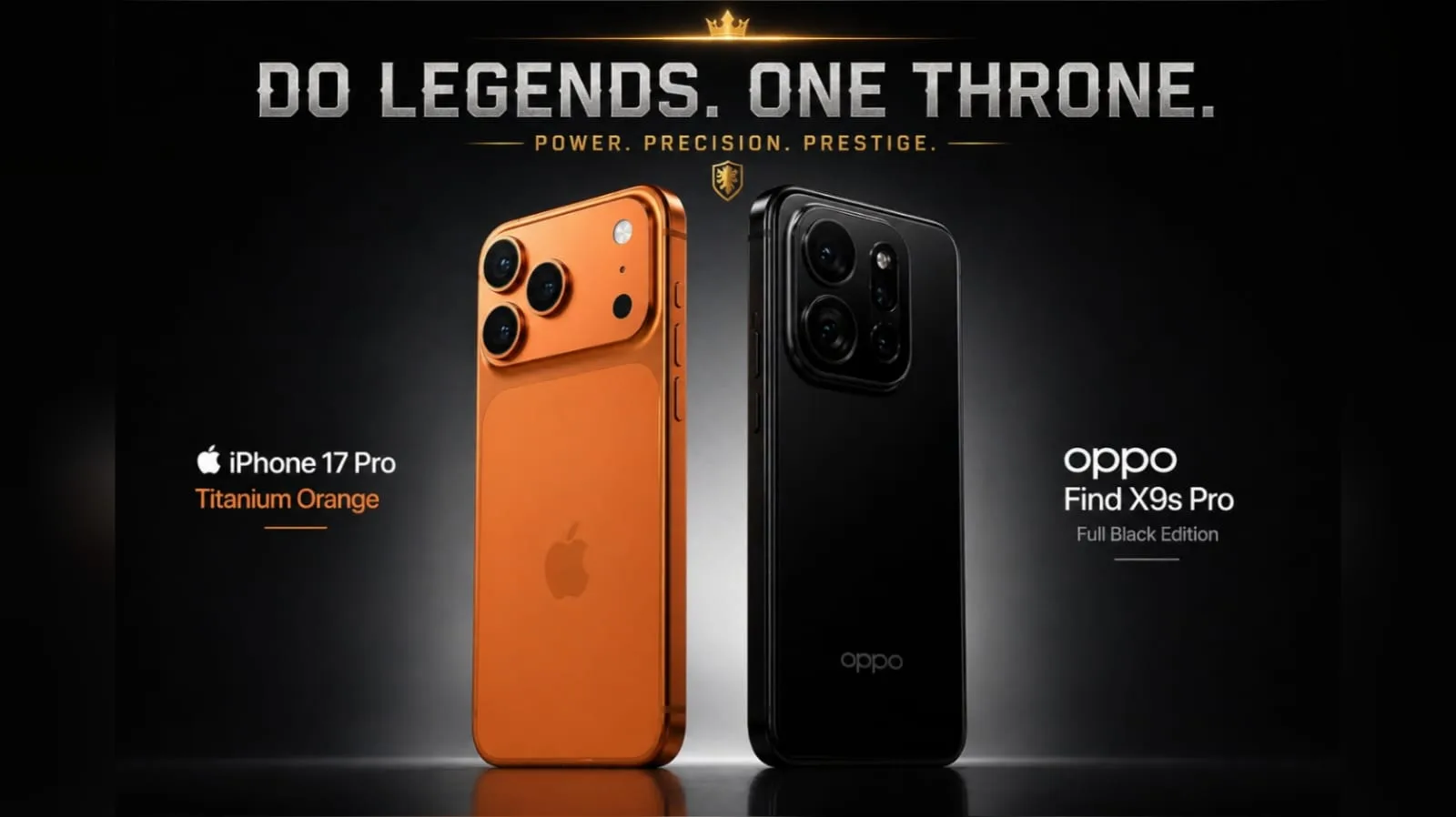
The smartphone world is witnessing a fierce battle between two powerful, compact flagships: Apple’s iPhone 17 Pro and OPPO’s Find X9s Pro. If you’re looking for a premium phone that fits comfortably in one hand without compromising on top-tier features, this head-to-head is for you. The iPhone 17 Pro sports a sleek titanium-like orange finish with its signature triple-lens arrangement, while the OPPO Find X9s Pro’s bold, large camera module comes in clear or dark casing. But looks are just the beginning. Let’s delve deeper into the design, display, performance, camera, battery, and more. So, let’s see which phone is worth your hard-earned money. Pricing and Availability iPhone 17 Pro: Priced starting at around $1,099 (approximately ₹1,09,999+ in India), reflecting its premium ecosystem. OPPO Find X9s Pro: Pricing is more competitive, with prices expected to range from ₹70,000–₹90,000 in India from the base to the top variants (recently launched in China, expected to arrive in India/global soon). iPhone vs. OPPO Feature iPhone 17 Pro OPPO Find X9s Pro Display 6.3″ Super Retina XDR OLED, 120Hz, 3000 nits 6.32″ 1.5K LTPO AMOLED, 144Hz Processor Apple A19 Pro (3nm) MediaTek Dimensity 9500 (3nm) RAM / Storage 12GB / 256GB–2TB Up to 16GB / 256GB–1TB Rear Camera Triple 48MP system 200MP + 200MP + 50MP (Hasselblad) Front Camera 18MP selfie camera 32MP Selfie Camera Video Recording Best-in-class 4K Dolby Vision Up to 8K 30fps Processor Apple A19 Pro (3nm) MediaTek Dimensity 9500 (3nm) Operating System iOS 26 (long-term updates) Android 16 + ColorOS 16 Battery ~4,200 mAh 7,025 mAh Charging Fast wired + MagSafe 80W wired + 50W wireless Build & Protection Ceramic Shield 2, IP68 IP68/IP69, ultrasonic fingerprint Price ₹1,09,999+ ₹79,990 – ₹96,000 Design and Build: A Comparison of Compact Powerhouses Both smartphones are specifically designed for users who want a compact, premium experience rather than bulky “Max” or “Ultra” models. iPhone 17 Pro: Its approximately 6.3-inch display features a refined and minimalist design, excellent button placement, excellent in-hand feel, and supports an adaptive refresh rate of up to 120Hz. It weighs approximately 200g and has a top-tier IP68 rating, providing complete protection against water and dust. OPPO Find X9s Pro: It features a flat display with uniform, ultra-thin bezels, making it a stylish device. The device is available in several vibrant and attractive colors. It features robust IP68/IP69 protection and a 3D ultrasonic in-display fingerprint scanner. Winner: For most users, both are equal—the iPhone with its robust ecosystem, and the OPPO with its trendy colors and simple design. The images perfectly illustrate how both prioritize premium materials, but with different visual signatures. Display: Brightness vs. Refresh Rate From scrolling through social media to watching videos, the display is crucial to a great user experience. iPhone 17 Pro: 6.3-inch OLED Super Retina XDR display, 1-120Hz adaptive refresh rate, 3000 nits peak brightness for vibrant colors and a great HDR experience. With a resolution of approximately 2622 x 1206 (~460 ppi), this display delivers crisp and bright visuals even outdoors. OPPO Find X9s Pro: 6.32-inch premium LTPO AMOLED screen (or similar high-quality panel) with a 144Hz refresh rate for a great experience. It comes with a 1.5K resolution (approximately 1216 x 2640) and 1800+ nits of peak brightness, which is impressive, but doesn’t offer the same sharp visibility in sunlight as Apple. Winner: The iPhone 17 Pro outperforms the other phones with its high brightness and precise color calibration – ideal for outdoor use and content creation. With a 144Hz display, the OPPO offers users ultra-smooth scrolling and a great gaming experience. Camera: Megapixels vs. Computational Magic Camera Comparison: Megapixels vs. Computational Magic The camera often plays a decisive role – and the hardware differences are clearly visible in the photo you provided. iPhone 17 Pro: It features a triple 48MP Fusion Camera system (main, ultra-wide, and telephoto) with advanced sensor-shift OIS, ProRes, Apple Log, and Pro Video features. It delivers consistency, natural color, stable output, and excellent low-light photography in all conditions. It’s also strong in video recording, making it a favorite for vlogging and boasts excellent stabilization. OPPO Find X9s Pro: It features an aggressive quad-like setup with dual 200MP sensors, a 200MP periscope (3x zoom), and a 50MP ultra-wide and color lens. This camera, tuned with Hasselblad, excels at portraits and color science, as well as zoom and high-resolution stills. Some reviews mention its excellent dynamic range and impressive macro capabilities. Winner: While this is entirely a personal preference, the iPhone 17 Pro offers better video quality and a smoother point-and-shoot experience. The OPPO Find X9s Pro’s dual 200MP camera setup offers excellent detail and excellent zoom, which will appeal to large file editors. Both excel in practical tests, but OPPO pushes hardware limits while Apple excels at software processing. Performance: Raw Power vs. Efficiency Both smartphones are capable of delivering top-tier performance. iPhone 17 Pro: This device is powered by the A19 Pro (3nm) processor, featuring a 6-core CPU, 6-core GPU, 12GB of RAM, and a powerful Neural Engine for Apple Intelligence. This device delivers stable performance, a smooth gaming experience, and optimized iOS. Benchmark tests demonstrate excellent efficiency and long-lasting smoothness. OPPO Find X9s Pro: This device’s MediaTek Dimensity 9500 (3nm), 16GB of LPDDR5X RAM, and UFS 4.1 storage elevate it to flagship level. This device scores high on AnTuTu due to its high-performing multi-core system and AI capabilities. ColorOS 16 (Android 16) offers enhanced customization, multitasking, and features like an IR blaster. Winner: Depends on your personal preference. The iPhone’s simple ecosystem, video editing, and excellent optimization set it apart, while the Oppo offers raw performance, higher RAM, and Android customization. Also Read :  iPhone 17 Complete Information – Is It Worth Buying? Battery and Charging: Endurance King? Battery and Charging: King? The difference between a great phone and a great phone for everyday use is its battery life. iPhone 17 Pro: A battery of approximately 4,000–4,250 mAh, combined with the A19 Pro’s optimizations, delivers reliable all-day backup. It offers fast wired charging (up to 50% … Read more

Tim Cook’s Biggest Mistake and Proudest Moment Revealed Before Leaving Apple

Tim Cook biggest mistake before leaving Apple revealed

When Tim Cook steps down from Apple this September, he will leave behind a legacy that most CEOs only dream of. But what makes his story truly human is the way Tim Cook’s biggest mistake and his proudest moment shaped his journey as CEO. One was a moment when he failed publicly, and the other was when he realized what truly matters most. In his own words, these are the moments that have defined his 14 years as CEO. A Rare Moment of Candor from Apple’s Quiet Leader For nearly 14 years, Tim Cook has steered Apple with remarkable composure and prudence. Before stepping down as CEO this September, he did something rarely seen: he spoke openly about a major failure and a success that fundamentally shifted his perspective. It is this raw honesty and candor that makes this story so unique. Compared to Steve Jobs, Tim Cook is known for his much quieter and more reserved demeanor. He rarely admits to his mistakes in public. This time, however, he spoke from the heart. He recounted an error that caused him deep embarrassment, and also shared a moment that brought him to a complete halt and forced him to reflect deeply. This offers us a rare glimpse into how things truly operate within the inner workings of Apple. Tim Cook biggest mistake He Still Cannot Forget Tim Cook biggest mistake If most CEOs were asked about their biggest failure, they would likely offer a carefully measured response. Tim Cook, however, pointed directly to the year 2012. This was the time when Apple launched its Maps app. The launch proved to be a major debacle for Apple. Routes were displayed incorrectly, place names were misspelled, and numerous landmarks were inaccurately depicted. Consequently, public outrage reached a fever pitch. This was the moment where the story of his greatest mistake began. Cook admitted that his team had conducted testing for the app in a very limited number of locations and had failed to accurately anticipate the scale at which it would be used in the real world. Also Read :  iPhone 17 Complete Information – Is It Worth Buying? Admitting One’s Mistake Publicly—And That Was the Most Significant Part This is where the story of Tim Cook’s biggest mistake becomes even more intriguing. Instead of trying to conceal his error, Tim Cook offered a public apology. He told iPhone users quite frankly that they were free to use other mapping applications if they wished. He even admitted that, at the time, Google Maps was superior to Apple Maps. Making such a statement is no easy feat for the CEO of a major corporation; it requires immense courage. By openly accepting Tim Cook’s biggest mistake, he showed true leadership and emphasized that his users remained his absolute top priority. This constitutes the greatest lesson of this entire narrative: speak the truth and put your users first. What This Mistake Teaches Us About True Leadership This story is not merely about a mapping application; it serves as a prime example of true leadership. If you make a mistake, acknowledge it openly, point people toward better alternatives, and then quietly work diligently to rectify it. Tim Cook did exactly that. And that is precisely why, today, this incident is regarded as a textbook example of crisis management. The Moment That Stopped Tim Cook in His Tracks Tim Cook in His Tracks Now, we arrive at the second and most gratifying part of this story. After reflecting on Tim Cook’s biggest mistake with Apple Maps, his proudest moment was not defined by iPhone sales figures or the company’s profit margins. Instead, it centered on a letter related to the Apple Watch that a user had sent in. The user wrote to explain that the Apple Watch had saved his life. Tim Cook recounted that, upon reading this, he paused completely, frozen in the moment, for several seconds. A User’s Letter That Changed Everything A man was going about his daily routine when his Apple Watch alerted him to a potentially life-threatening heart condition. He sought medical attention in the nick of time, and his life was saved. When Tim Cook read this email, he was deeply moved. In that single moment, all the stress and pressure associated with leadership suddenly felt profoundly meaningful to him. Subsequently, thousands of similar letters poured in, with people sharing how the Watch had saved them from falls, heart-related issues, and various other health complications. The Journey from Fashion Gadget to Health Companion The Journey from Fashion Gadget to Health Companion Apple Watch The Apple Watch made its debut in 2014, initially positioned as a fashion accessory. But today, it has become the most widely used health wearable in the world. Tim Cook played a pivotal role in advancing features such as ECG, fall detection, and blood oxygen sensing within the device. A mistake with Maps taught him humility, while the Watch revealed to him the true meaning of his work. Also Read : Samsung Galaxy S26 Ultra 5G: 5000mAh battery, Snapdragon 8 Elite Gan 5, 200MP Camera. What Comes Next? John Ternus Takes the Helm Tim Cook will step down from his position on September 1st. Following him, John Ternus will assume this responsibility. In the very same town hall where Cook shared his story, Ternus stated that the upcoming roadmap would once again transform the world. This September, people can look forward to seeing the iPhone 18 Pro and Apple’s first foldable iPhone. The Final Lesson: Always Put the User First The Final Lesson: Always Put the User First If there is just one takeaway from this entire story, it is this: even great leaders make mistakes.Tim Cook’s biggest mistake, the Apple Maps error, later became a powerful lesson in leadership because he rectified it by putting users above everything else. And his proudest moment was not a profit record, but rather a human life that was saved. This is his true story: learning from mistakes, growing through … Read more

Vivo X300 FE: Premium Design, Powerful Performance in 2026

Vivo X300 FE: Premium Design With Powerful Performance

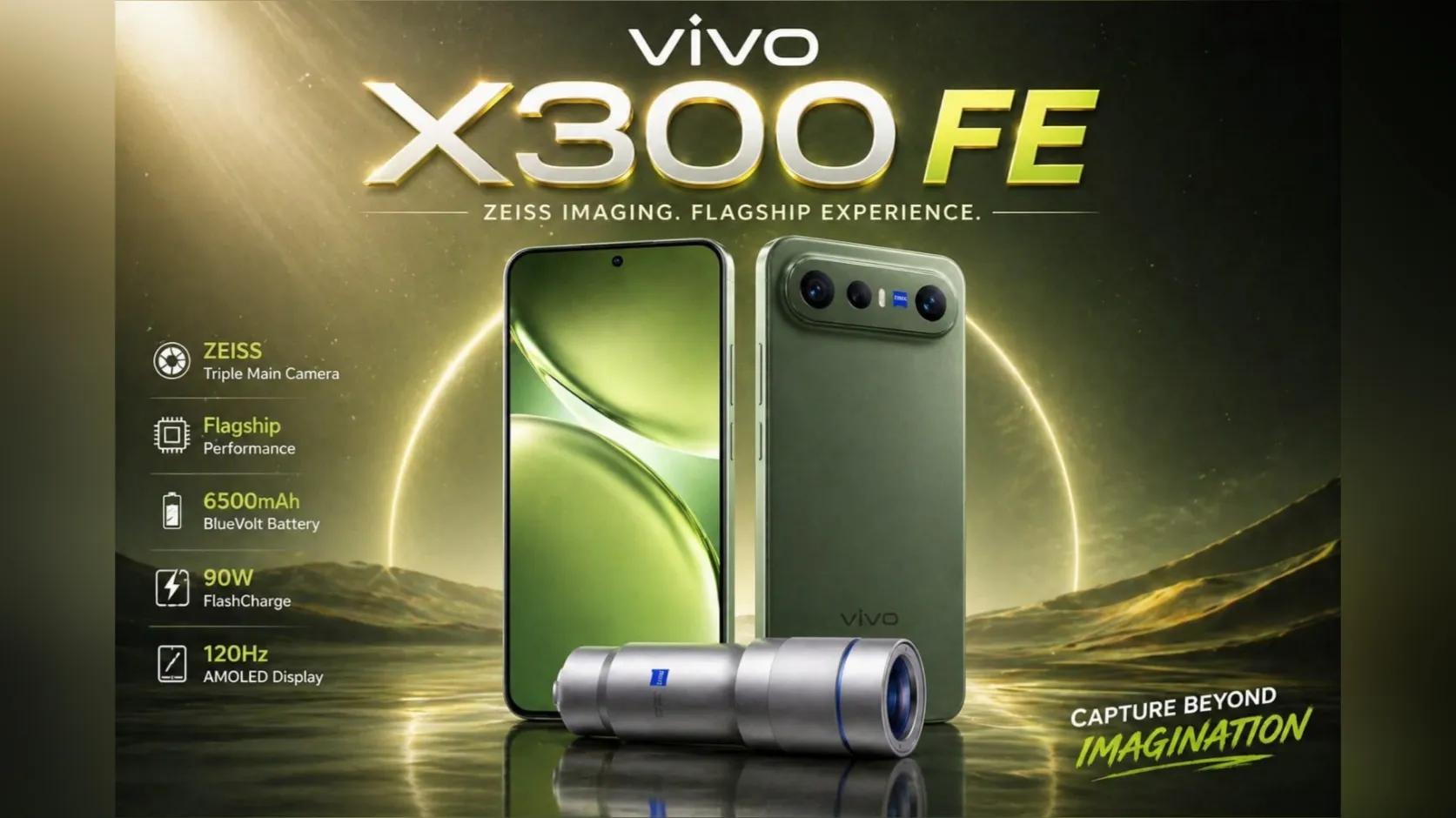
To be honest? Until just a few weeks ago, the Vivo X300 FE wasn’t even on my radar, not in the slightest. Yet, it has so rapidly become one of the most intriguing smartphones I’ve come across that I am genuinely excited to share with you exactly what makes it so special. Let me tell you: this phone features a dual 50MP rear camera setup, a 50MP front camera, a MediaTek Dimensity 9500 chipset, and a 6.31-inch 1.5K LTPO AMOLED display with a 120Hz refresh rate. Now, here’s the thing: Vivo X300 FE has already launched in certain global markets, such as Russia and parts of Europe. But as for India? It is scheduled to launch on May 6, 2026. So, while it isn’t physically in my hands just yet, meaning I can’t provide you with a full hands-on review, don’t worry. We still have plenty of solid information to go through together. Let’s dive in. Highlight key 6.31-inch 1.5K LTPO AMOLED with 120Hz refresh rate, perfect for one-handed use. Supports an external ZEISS telephoto extender reaching up to 200mm zoom. Massive 6,500mAh battery that easily lasts over a day. Powered by the Snapdragon 8 Gen 5 flagship chipset for buttery-smooth performance. IP68 and IP69 ratings for dust, pool dips, and even hot water splashes. Vivo X300 FE Price & Launch Hey friend, I have some confirmed news for you: the Vivo X300 FE is going to launch in India on May 6, 2026. It was priced at ₹71,000 in Russia, but I guess here the smartphone will be priced at ₹79,999 for the 12+256GB (base) model and ₹89,999 for the 512GB variant. You will have two options to choose from: the 12+256GB (base) model and the 512GB variant. You can pre-order this smartphone via Flipkart, Amazon, or the Vivo India e-store. Oh, and yes, it also comes bundled with a ZEISS telephoto kit worth approximately ₹15,999; while I personally feel that’s a bit pricey, the phone itself is absolutely fantastic. Vivo X300 FE Specifications Category Details Height, Weight & Resolution 150.83 mm, 190g, (1216 x 2640 pixels) Display 6.31-inch LTPO AMOLED Refresh Rate 120Hz Rear Camera 50MP + 50MP + 8MP Camera Front Camera 50MP Selfie Camera Video Recording 4K at 60FPS Processor Snapdragon 8 Gen 5 Operating System Android 16, OriginOS 6 Fingerprint Sensor 3D Ultrasonic In-display RAM & Storage 12GB LPDDR5X Ultra Storage 256GB / 512GB UFS 4.1 Colour Moonlight White, Cool Purple, and Graphite Black. SIM Dual Nano-SIM Battery 6500mAh Fast Charging 90W Fast Charging Connectivity 5G/ 4G / 3G / 2G Support Bluetooth Bluetooth v6.0 Dust & Water Resistance IP68 / IP69 Rating AnTuTu Score 3.1 MILLION+ Warranty 1 Year Warranty Launch 6 May, 2026 Price Starting Price: ₹79,999/- Display, Design, & Build Quality 6.31 inch AMOLED Display 120Hz Refresh rate Look, generally speaking, bringing high-end specifications into a compact form factor requires making compromises somewhere along the line. However, looking at the Vivo X300 FE, I feel that Vivo has found a way to crack this code. Its 6.31-inch LTPO AMOLED display is truly incredible, delivering stunning visuals and is remarkably easy to operate with just one hand. It features a dynamic refresh rate of up to 120Hz, which means scrolling is absolutely buttery-smooth and glitch-free; furthermore, take my word for it, it boasts a peak brightness of 5,000 nits, ensuring the screen remains clearly visible even outdoors under bright sunlight. Personally, I really appreciate that Vivo opted for a flat display on this phone. To be honest, it feels quite robust, being protected by Gorilla Glass 7i. Additionally, in my opinion, applying a tempered glass screen protector is much easier on a flat screen, and it also saves you from the annoyance of accidental touches along the edges. Moreover, the Vivo X300 FE is quite slim, measuring just 7.99mm in thickness. However, its true highlight is its durability; Vivo has endowed it with IP68 and IP69 ratings. This means it offers protection not only against water splashes but also against high temperatures and high-pressure water jets. And yes, this smartphone is, in fact, the global variant of the Vivo S50 Pro Mini. Camera Features Camera Specs | Main Sensor & Zoom This is where things get really interesting. The X300 FE sports a 50MP (Sony IMX921, f/1.57) main sensor, a 50MP (Sony IMX882) 3x optical zoom, an 8MP ultra-wide, and a 50MP selfie camera. You get flagship-tier image quality with vivid colors and sharp details, especially from that 3x telephoto lens. But the real game-changer is its support for the vivo ZEISS Telephoto Extender Gen 2, an external lens that magnetically attaches to the back. This portable lens gives you optical zoom out to a massive 200mm equivalent focal length, and has custom features like a dedicated AI True Clarity Engine. It’s the kind of tool you’d bring to a concert or a sporting event. For general use, features like the Dual-View Stage Video mode are great for vloggers. Also Read :  iPhone 17 Complete Information – Is It Worth Buying? Processor Performance Processor Specs | Chipset Details You might have heard that the “FE” in “Fan Edition” can sometimes mean a downgrade in the processor department. But here, Vivo has flipped the script. It packs the Snapdragon 8 Gen 5, built on a 3nm process. Paired with 12GB of LPDDR5X Ultra RAM, it delivers flagship-level speeds. Whether you’re gaming or jumping between 20 apps, this phone will feel nearly effortless to use. Software The X300 FE runs on Android 16, with Vivo’s OriginOS 6 skin on top. It offers a host of AI tools for enhancing photos and videos, and Vivo has promised 5 years of Android OS updates and 7 years of security patches. That means it could be in your pocket receiving updates all the way until 2033, making it a very solid long-term investment. Battery & Connectivity Vivo X300 FE Battery & Charging With a 6,500mAh silicon-carbon battery, the X300 FE offers the stamina of a gaming phone … Read more

Redmi K90 Max: Powerful Beast with Extreme Performance

Redmi K90 Max: Powerful Beast with Extreme Performance

If you are someone who plays a lot of mobile games or uses your phone for lighter tasks, the Redmi K90 Max smartphone is an excellent choice. Leaks and reports suggest that this device is set to launch in China within the performance-focused segment. A standout feature of this phone is the inclusion of a built-in cooling fan feature typically found in gaming phones from brands like Asus ROG or Nubia Red Magic. If you were to ask me, I would say I feel a sense of pride in Redmi for attempting something truly innovative, striving to deliver a sleek, clean device with a flagship-level, stylish design. Furthermore, leaks indicate that this phone will feature a massive 8,550 mAh battery, an AMOLED display with a 165Hz refresh rate, a MediaTek Dimensity 9500 processor, and support for 100W fast charging. This phone promises to be an intriguing option for both gamers and non-gamers alike, as it offers impressive gaming-specific features alongside excellent multitasking capabilities. So, let’s dive into the detailed specifications and features of the Redmi K90 Max. Highlight key Built-in rear cooling fan for better thermal performance during long gaming sessions Massive 8,550mAh battery with 100W fast charging support 6.83-inch 1.5K AMOLED display with 165Hz refresh rat MediaTek Dimensity 9500 flagship chipset Premium IP66, IP68, and IP69 dust-water resistance ratings Redmi K90 Max: Price and Launch Date According to reports, the price of the Redmi K90 Max in China starts at CNY 3,499, which translates to approximately ₹48,200 in Indian currency. It has been revealed that the base model will feature 12GB of RAM paired with 256GB of storage. While this phone has already been launched in China, it has not yet been released in India. Furthermore, indications suggest that this device will not launch in India under its current name; instead, it is likely to arrive as the Xiaomi 17T. If you are looking to purchase a flagship smartphone that delivers high-performance capabilities, you may have to wait a little longer for this device to launch in India. Display, Design & Build Quality The Redmi K90 Max is expected to feature a 6.83-inch AMOLED display, notable for its potential resolution of 2772 x 1280 pixels. This device boasts a 165Hz refresh rate, a truly excellent and impressive feature, especially considering that most contemporary phones, even flagships, typically top out at 120Hz or 144Hz. When compared to devices like the iQOO 15 or OnePlus 13R, I personally find this particular upgrade to be far superior. If you are someone who engages in heavy multitasking or intense gaming and desires a professional aesthetic combined with smooth scrolling and a premium design, this phone delivers exactly that experience and feel. The device is expected to offer a peak brightness of 3500 nits, ensuring that viewing the display remains completely hassle-free, even under bright sunlight. “Speaking of design, what I appreciated most is that Redmi didn’t go overboard. There is no loud, flashy ‘gaming’ aesthetic here; even the circular cooling fan visible on the back panel looks classy, reminiscent of something out of a sci-fi movie. The rest of the design is remarkably understated yet regal. It features an aluminum frame along the sides, and the screen bezels are so thin that there is barely enough room to rest your fingers; the premium sensation you get the moment you hold it in your hand is a significant step up from previous K-series models.” Also Read:  iPhone 17 Complete Information – Is It Worth Buying? Redmi K90 Max: Camera Features Hey man, to be honest? We all know that people don’t buy gaming phones for their cameras. Yet, just look at the camera on the Redmi K90 Maxit, which actually seems pretty solid to me. What do you think? It features a 50MP main camera, an 8MP ultra-wide lens, and a 20MP front-facing selfie camera. And get this: the main sensor is expected to come with a combination of OIS and EIS, meaning your videos won’t be all shaky! This setup should handle everyday photos, social media posts, and on-the-go shots beautifully. Plus, that ultra-wide lens will even support 8K video recording! So, if you’re a content creator, consider yourself in luck. Whether you’re shooting gameplay videos, vlogs, or travel clips, the front camera should also be perfectly adequate for sharp selfies and video calls. Just keep in mind, though: if you’re looking for a truly top-tier, pixel-perfect camera experience, I still think Vivo or Google Pixel devices are the ones that really deliver. Processor Performance “Alright, let’s move on to the processor. This is where the Redmi K90 Max can truly shine. I believe this phone will be equipped with the 3nm MediaTek Dimensity 9500 chipset, which is a full-fledged flagship-grade SoC. If you’re a gamer, this is excellent news for you. In my opinion, this processor can effortlessly handle BGMI at Ultra settings, Genshin Impact at high frame rates, heavy multitasking, video editing, and extended gaming sessions. What makes it even more intriguing is the AI graphics chip and the built-in cooling fan. Look, thermal throttling is one of the biggest issues plaguing gaming phones. However, Redmi claims that this cooling system can lower the temperature by up to 10°C within just 100 seconds, which is truly impressive. The fan operates at a mere 32dB, meaning it will remain quite quiet during gameplay. This offers a significant advantage over standard flagship phones that tend to heat up after just 40–50 minutes of continuous gaming. Software: The Redmi K90 Max is expected to operate on HyperOS 3, built over Android 16. If you’ve used previous Redmi phones, you’ll already have a good idea of what the UI is like. I feel that HyperOS has become significantly smoother and more refined compared to the older MIUI. You can expect features such as gaming optimization tools, AI performance boosts, advanced customization options, floating windows, and smart battery management. For gamers, the dedicated performance modes and frame stabilization tools will prove to be extremely useful. … Read more

iPhone 18 Pro Max vs iPhone 17 Pro Max: Best or Waste?

iPhone 18 Pro Max vs iPhone 17 Pro Max: Best or Waste?

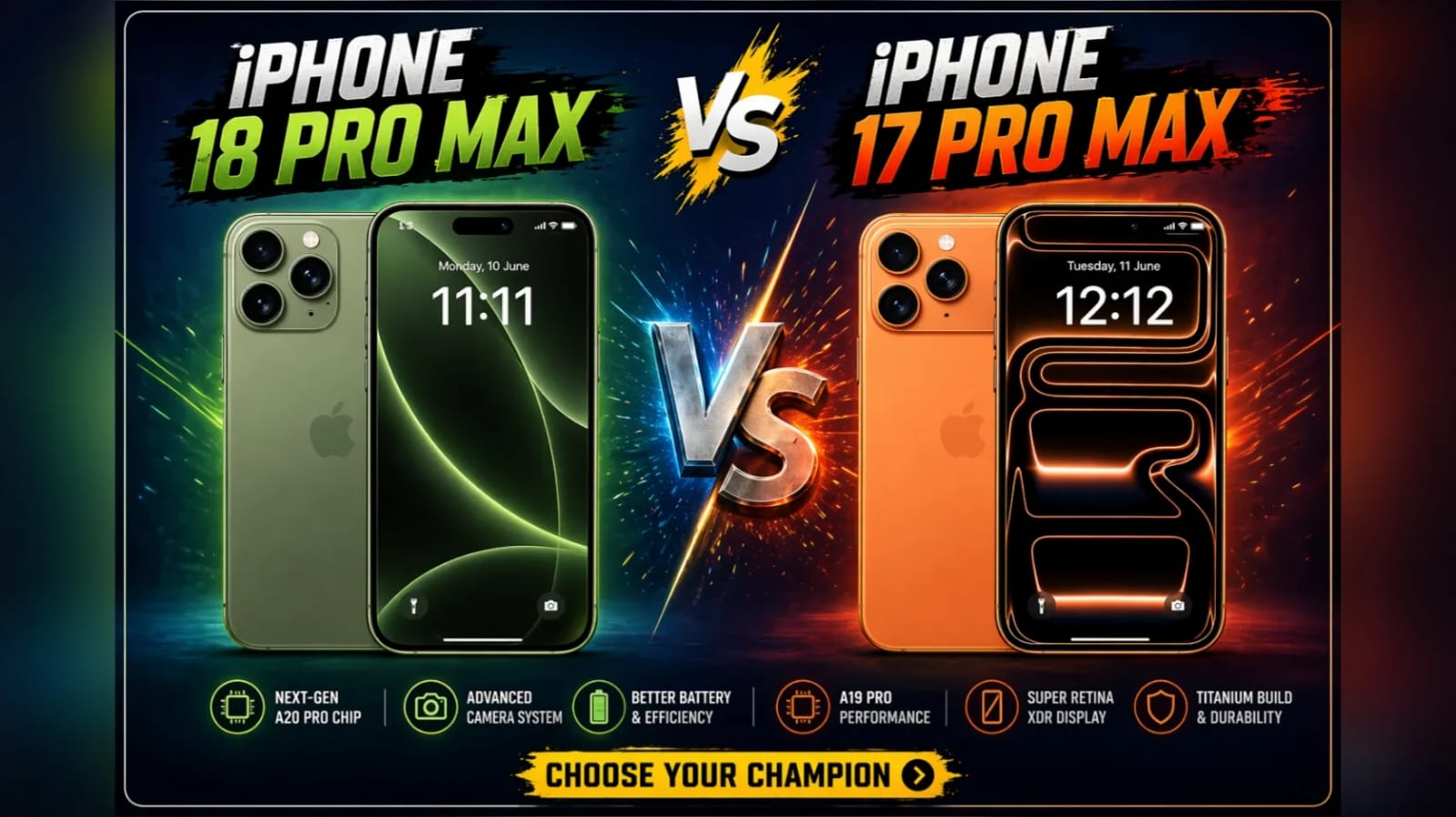
Every September, Apple fans face a common question: should they upgrade their old phones or wait? But the gap between the iPhone 17 Pro Max and the iPhone 18 Pro Max has widened even further. Apple’s competition isn’t against companies like Samsung or Google anymore – it’s against its own previous iPhone models. Both the iPhone 18 Pro Max and iPhone 17 Pro Max feature titanium builds, 6.9″ displays, and iOS 20. The 18 Pro Max features a 1.6nm chip, 10x optical zoom, and a larger 42-hour battery – while the 17 Pro Max retains its 5x zoom and 3nm processor from the previous generation. Is this upgrade worth it at $1,299? Or is buying the 17 Pro Max a smart purchase? This simple comparison gives you the answer. Let’s put this debate to rest. Price & Availability Model Starting Price (256GB) Highest Storage iPhone 17 Pro Max $1,199 2TB ($1,899) iPhone 18 Pro Max $1,299 4TB ($2,199) Pre-order: September 12, 2026 | Release: September 19, 2026 (Expected) Apple has removed the iPhone 17 Pro Max from its official store; visit platforms like Amazon or Back Market to find discounts on it. Quick Overview – For the Social Media Scroller Feature iPhone 17 Pro Max iPhone 18 Pro Max Chip A19 Pro (3nm) A20 Pro (1.6nm) Display 6.9″ LTPO, 2000 nits 6.9″ Ultra Retina XDR, 3000 nits Main Camera 48MP (f/1.78) 50MP Stacked Sensor (f/1.6) Telephoto 12MP, 5x optical 48MP Periscope, 10x optical Battery Life Up to 29h video Up to 42h video Charging USB-C 35W USB-C 50W + 25W MagSafe RAM 8GB 12GB Starting Price $1,199 $1,299 (Expected) Design & Build – Titanium vs Titanium 2.0 Both phones use Grade 5 titanium, but the iPhone 18 Pro Max’s layered composite structure makes it 15% lighter and more scratch-resistant. iPhone 17 Pro Max: 221g | Thickness: 8.25mm | Action Button iPhone 18 Pro Max: 199g | Thickness: 7.8mm | Capture Button Color Options: iPhone 17 Pro Max: Blue Titanium, Natural Titanium, Black Titanium, White Titanium. iPhone 18 Pro Max: Silver Titanium, Deep Red Titanium, Matte Black Titanium, Gold Titanium. The result: The iPhone 18 Pro Max feels thinner and more premium. Mobile photography is now upgraded with the Capture Button. Display Feature iPhone 17 Pro Max iPhone 18 Pro Max Peak HDR Brightness 2000 nits 3000 nits (Expected) Outdoor Visibility Good in sun Visible even in desert sun (Expected) Always-On Display 1Hz down to 10Hz 1Hz with wallpaper color boost (Expected) Ceramic Shield Gen 2 Gen 4 (Expected 5x drop resistance) The iPhone 17 Pro Max and iPhone 18 Pro Max both feature stunning 6.9-inch ProMotion OLED display technology. But once you go outdoors, the difference is clear – the 18 Pro Max’s new 3000-nit peak brightness pales in comparison to the 17’s 2000-nit screen. Winner: iPhone 18 Pro Max – the brightest and toughest screen ever on a phone. Performance – A20 Pro (1.6nm) vs A19 Pro (3nm) This is where the real generational shift is evident. The iPhone 17 Pro Max (A19 Pro) features a 3nm processor, 20B transistors, a 6-core CPU, a 6-core GPU, and a 16-core Neural Engine. The iPhone 18 Pro Max (A20 Pro): 1.6nm, 35B transistors, an 8-core GPU, an 8-core CPU (2+6), and a 32-core Neural Engine. Real-world differences: App opening speed: 18 Pro Max 30% faster Heavy gaming results: The 17 Pro Max drops to 54fps after 20 minutes, while the 18 Pro Max runs at a consistent 60fps AI processing (on-device Siri, image generation): Approximately 2.2x faster Geekbench 6 scores: iPhone 17 Pro Max’s Geekbench scores: Single-core 3,200, multi-core 8,400 iPhone 18 Pro Max: Single-core 4,500, multi-core 12,100 Winner: Clearly, the iPhone 18 Pro Max wins by a wide margin. Perfect for AI, gaming, and upcoming iOS updates. Camera System Apple has combined the rear sensors into a single module. iPhone 17 Pro Max: Main camera setup: 48MP lens, f/1.78, sensor-shift technology support Ultra-wide lens: 12MP resolution with f/2.2 aperture Telephoto camera: 12MP sensor, 5x optical and 25x digital zoom capability iPhone 18 Pro Max: Primary camera: 50MP stacked sensor, 40% brighter photos with f/1.6 Ultra-wide camera: 48MP (f/1.8), 4cm macro detail Telephoto camera: 48MP periscope lens, 10x optical zoom and 100x digital zoom feature Night Mode: The iPhone 18 Pro Max captures up to 2 stops brighter photos with zero shutter lag. Video performance: 8K HDR is common to both, but the 18 Pro Max benefits from 4K@60fps cinematic mode, while the 17 only offers 1080p@30fps. Winner: iPhone 18 Pro Max – The zoom alone makes the iPhone 17 feel dated. Battery and charging The A20 Pro’s impressive efficiency and large battery cell = a real battery champion. The iPhone 17 Pro Max features a 4,850mAh battery, offering 22 hours of video playback, with 35W wired charging (0-50% in just 25 minutes) and 15W MagSafe support. The iPhone 18 Pro Max features a 5,250mAh battery, offering 32 hours of video playback, with 50W wired charging (0-50% in just 15 minutes) and 25W MagSafe support. Winner: iPhone 18 Pro Max – Delivers about 30% more battery life. Software & Exclusive Features Both devices come with iOS 20, but the 18 Pro Max’s 12GB of RAM (compared to 8GB) improves performance. AI features: Instant language switching in FaceTime calls Xcode AI: Create code on-device without internet access Augmented reality-based smart dashboard in Apple CarPlay 2.0 These updates may be rolled out gradually to the iPhone 17 Pro Max via cloud-based deployments. Winner: iPhone 18 Pro Max – The next step in AI is on-device technology. Which One Should You Buy? You own… Recommendation iPhone 15 Pro Max or older Upgrade to iPhone 18 Pro Max – massive leap in battery, camera, speed. iPhone 16 Pro Max Consider upgrade if you want 10x zoom or 2-day battery. iPhone 17 Pro Max No need to upgrade unless you’re a pro photographer or gamer. The 17 is still a beast. Android user Get the 18 Pro Max – best iPhone ever made. Final Verdict The … Read more

iPhone 18 Pro Max: Powerful Upgrade or Expensive Mistake?

iPhone 18 Pro Max: Powerful Upgrade or Expensive Mistake?

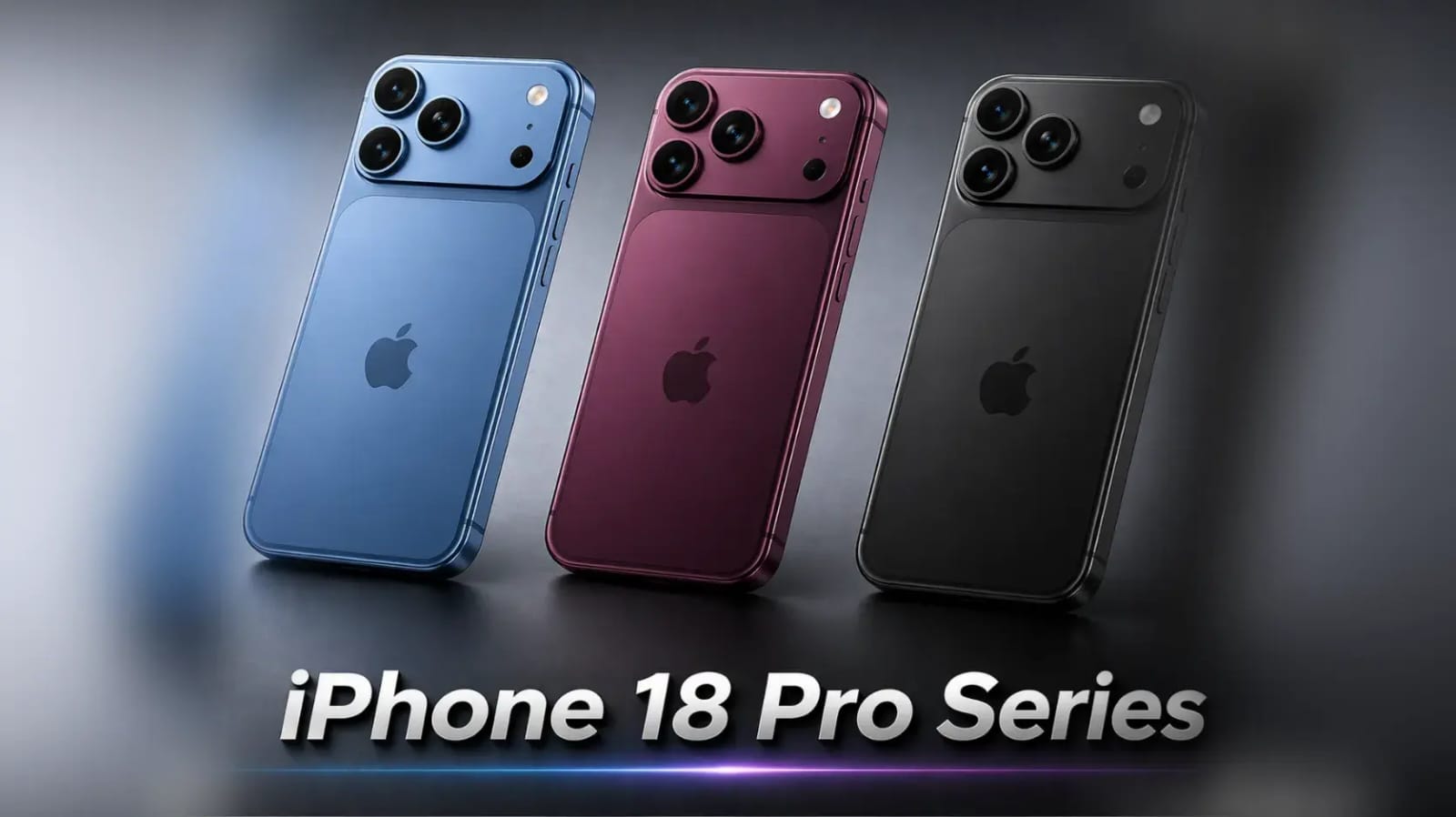
The buzz surrounding the iPhone 18 has already begun, generating excitement among all iPhone users. Apple fans are already anticipating the arrival of iPhone 18 Pro and Pro Max models in September 2026, a few months from now. This time, the company may slightly alter its launch strategy, making the iPhone 18 series look slightly different from previous models. The Pro and Pro Max models could arrive by September, while users may have to wait until spring 2027 for the standard iPhone 18. A foldable iPhone is also expected to join the lineup around this time. Users who own the iPhone 17 or earlier models will likely find the iPhone 18 Pro series to offer significant upgrades. While it’s best to keep the design unchanged, significant internal changes are expected. Let’s explore in detail what’s new. iPhone 18 Pro Series – Key Highlights “Rumored” Smaller Dynamic Island (~35%) – Cleaner display experience 48MP Triple Camera Setup with Variable Aperture Advanced Apple Intelligence (On-device AI) features New C2 Modem for better 5G & satellite connectivity A20 Pro Chip (2nm Technology) – Faster performance + better efficiency New premium color: Dark Cherry (Wine Red) Bigger Battery (Up to ~5200mAh in Pro Max) Improved charging: 40W wired + 25W wireless Storage up to 2TB Split Launch Strategy (Pro models in 2026, standard in 2027) Possible Foldable iPhone launch alongside Launch Timing and Availability According to Apple’s launch tradition, the iPhone 18 Pro and Pro Max are expected to launch around September 8-15, 2026. Pre-orders are expected to begin that week, and sales will begin a few days later. I believe a foldable iPhone (also being called the iPhone Fold or Ultra) could also arrive alongside these models. Leaks suggest the standard iPhone 18 and a budget variant, the iPhone 18e, are expected to arrive in early 2027. This change is being made to allow Apple to offer more options to its users. Adding a new form factor like foldable phone technology will provide users with many new options in the future. Price in India and who should buy it? The iPhone 18 Pro is expected to start around ₹134,900-₹140,000 in India, while the Pro Max will likely be priced above ₹150,000. Storage options will start at 256GB and go up to 2TB. If you’re a heavy user and want a pro camera and better performance, the Pro Max will be a good option. For regular users, it’s best to wait for the standard iPhone 18, which is expected to be cheaper in 2027. Overall, the iPhone 18 Pro series offers substantial improvements in performance, camera, and battery life, not incremental upgrades. Technologies like the 2nm chip and variable aperture will make it future-proof. This year will be a special one for Apple with the foldable iPhone. Also Read:  iPhone 17 Complete Information – Is It Worth Buying? What’s new in design and display? The iPhone 18 Pro’s design is expected to be similar to previous models—such as a titanium frame, flat edges, and a premium look. However, the company has made some minor changes. The Dynamic Island may be slightly smaller, estimated to shrink by approximately 35%. This could be due to the shifting of some Face ID components inside the display. It’s expected that a fully under-display Face ID may also be introduced in the future, which could make the screen appear even cleaner. The Pro Max model may have a slightly thicker body (up to 8.8 mm) to accommodate the larger battery. The camera module will have a more unified look with the glass back. In terms of colors, a new Dark Cherry (deep wine red) option will be the headliner, replacing the previous Cosmic Orange. Colors like Light Blue, Silver, and Dark Gray may also be available. Black will likely be a rare sight this time around. Speaking of the display, the 6.3-inch (Pro) and 6.9-inch (Pro Max) OLED panels are expected to come with ProMotion technology and offer a 120Hz refresh rate. Brightness and color accuracy are expected to be better than before. Camera: DSLR-like Control This upgrade will be very exciting for camera lovers. The main camera’s 48MP sensor will feature variable aperture technology. This means the lens will be able to self-adjust, allowing it to capture more light in low light and avoid overexposure in bright light. This will improve low-light photos and depth of field. The ultra-wide and telephoto lenses may also be around 48MP. The front camera may receive an upgrade to 24MP, making selfies and video calls sharper. Overall, video recording and night mode will see improvements. Production has already begun, so these features are considered fairly certain. iPhone 18 Pro Max: Specifications Category Details Design 2868 × 1320 pixels Premium slim body, curved edges, ultra-thin bezels Display 6.9-inch LTPO Super Retina XDR OLED 120Hz ProMotion display Peak Brightness Up to 3500 nits (expected HDR brightness) Rear Camera 48MP primary sensor + 48MP ultra-wide lens Front Camera 24MP TrueDepth selfie camera Video Recording 8K video recording support Processor Apple A20 Pro chipset Operating System iOS 20 Battery Around 5000mAh (expected) Fast Charging 45W fast wired charging, MagSafe wireless charging, and limited reverse wireless charging Connectivity 5G, Wi-Fi 7, Bluetooth 5.4, USB-C RAM/Storage Up to 12GB RAM + 256GB / 512GB / 1TB / 2TB Gaming Performance Console-level gaming support Cooling System Improved vapor cooling technology Colors Black Titanium, Silver, Blue, Desert Titanium Water Resistance IP68 certified Expected Price in India Starting around ₹1,59,900 Performance: The Magic of the A20 Chip The biggest highlight of the iPhone 18 Pro series is its new A20 Pro chipset. This will be the first Apple chip built on TSMC’s 2nm process. The chip used in this variant is claimed to reduce power consumption and increase performance by up to 15%. Multitasking, gaming, and especially Apple Intelligence features (on-device AI) will run smoother than before. RAM can be expanded up to 12GB, which is a significant upgrade compared to previous models. The C2 modem will improve 5G speeds, … Read more